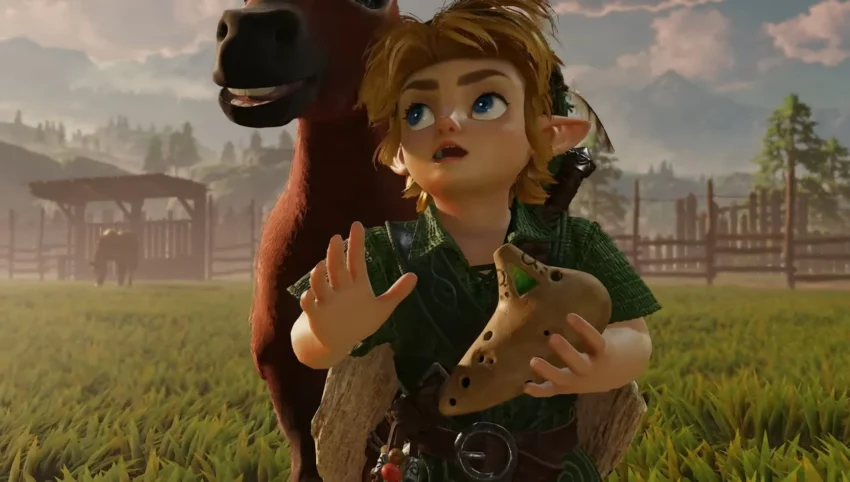
The Legend of Zelda: Ocarina of Time, my favorite game ever, and in my opinion, the greatest game ever created (especially when judged at the time of its release). With the long awaited remake’s release quickly approaching, expectations are now through the roof.
Going back to the Direct trailer, it was a stunning showcase of Nintendo’s artistic capabilities and Switch 2’s own modern hardware. More importantly, Nintendo captured perfectly the magical essence of that original 1998 classic. I didn’t think they would able to do it, but my rolling tears and frantic laughter (all at once, my wife thought I was going mad) were not able to hide the fact that The Legend of Zelda: Ocarina of Time Remake – at least in terms of looks and sounds – is everything I had dreamt up (when the possibility of a Remake became a reality) and perhaps, more… oh, so much more!
Great looking games have come and gone, but the magic, the feeling of a world that is alive, full of wonder, and a realm that one could dream about living in, that feeling is a rare thing to capture, and it had been missing in all of them. It seems that it is a feat that only Nintendo can pull. Judging by the last official trailer of the game, Nintendo has done what I thought was impossible to do in 2026. Deliver the same – or at least a similar – magical feel that a 13 year old version of me breathed and lived while watching 90s magazine screenshots, to a 41 year old, hardened, colder, much less hopeful version of me.
For the 3:05 minutes that the trailer lasted – between the tears, the crazy laughter, the nostalgic sighs, and the longing to live once more inside the world that changed my youth – the child in me, that I thought I had long buried, pulled my heart strings once more and said: “See? I never left you.”
Nintendo…I don’t have to words to thank you for this…But I thank you, nonetheless. You made forget the world, forget the problems, you have made me a happy child again.
But Back to the Article… These are The Reasons Why it Might Not Surpass The 1998 Original
1. The ‘WOW’ Factor

This might be the most important Area where the new Remake will never be able to match the original game’s magic. You see, the mid 1990s were a transitional period of the likes we haven’t – and might never – see again, as far as gaming goes.
There has been no bigger technological and tangible leap than that of Super Mario World to Super Mario 64…or in this case, A Link to the Past to Ocarina of Time. We have never seen a bigger leap in technology and interactive experience that matches that period where 2-D turned into 3-D. Basically, ‘first times’ are always special, and Ocarina of Time in 1998 did a lot of “first time” things that blew the mind of gamers and critics alike.
You will always remember your first kiss as the most magical one, in most cases, even if you went on to have dozens of girlfriends who were objectively better kissers than your first. There’s something about experiencing something for the very first time that makes it impossible to replicate.
Walking into Hyrule Field in Ocarina of Time for the first time felt much the same way. Seeing Hyrule Castle off in the distance—it seemed like miles away at the time—was undoubtedly the first time many, if not most, of us had stepped into such a gigantic 3D space. Rolling hills stretched out in every direction, and you could actually see landmarks far off in the distance without them being hidden behind heavy fog or obvious pop-in.
By today’s standards, Hyrule Field might seem small and technically limited, but back then, it felt enormous. It wasn’t simply a game world; it felt like a place you could actually get lost in. That first glimpse of the castle in the distance captured something that few games had managed to convey before: the sense that there was a vast world waiting for you just beyond the horizon. Games have gotten larger and prettier (thanks to newer technology) since then, but that first time remains a magical memory today, and if we were to judge games at the time of their release, no game has had that impact since.
Because of Ocarina was a game that established so many firsts in gaming, it would be hard to convey to younger generations just how ground breaking the game was in 1998. Like the Moon Landing in 1969, you basically had to be THERE in order to grasp the sense of wonder and discovery that 1990s kids felt when they first booted up their Cartridge on their N64s.
Modern gaming mainstays, like horseback riding, weather changes, and properly done – other games had done this mechanic before – day/night changes were pioneered by Ocarina of Time in 1998. The Remake (which appears to be 1:1 to the original) will not introduce any revolutionary mechanic to gaming (the clever use of the microphone for playing the Ocarina is interesting, but I wouldn’t call it revolutionary).
2. Ocarina of Time won 1998’s Game of The Year awards running away…Ocarina of Time Remake will lose the award to GTA VI in 2026
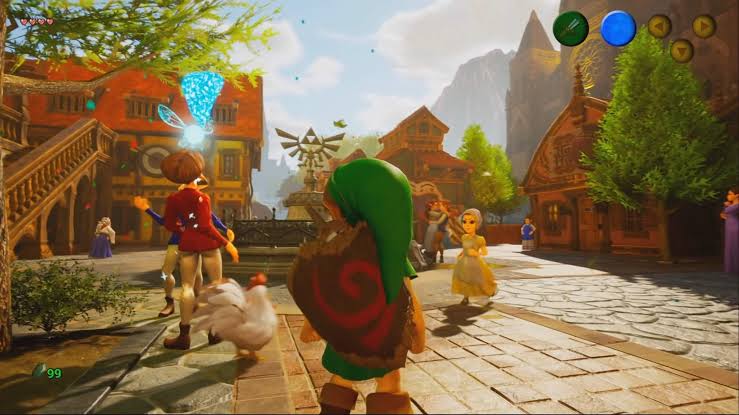
Ocarina of Time was the game that ruled the roost in terms of technical mastery and visual fidelity in 1998. PCs with 3-D acceleration were more powerful than the Nintendo 64, and the Dreamcast had just launched in Japan. But in the west, in terms of home console gaming, the Nintendo 64 was far more capable than either the Saturn or PlayStation 1 when it came to a fully polygonal 3-D experience. PC while having Half-Life, didn’t quite have a competitor in the fantasy open world genre that could match Ocarina’s brilliance either.
Panzer Dragoon Saga, Metal Gear Solid, and Resident Evil 2 were all amazing games, but they were quite outmatched when stacked against Ocarina of Time‘s achievements not just on a design level but on a technical one.
Simply put, the Nintendo 64 was the PS5 Pro of its time in terms of home console horsepower. The machine could simply pump larger 3-D worlds with smoother polygons than any of its competitors. Nintendo would certainly take advantage of this. The variety of locales, the detail in them, and the amount of things that Link could do in these environments was unrivaled by anything that had come before it.
Its 99/100 Metacritic score was no fluke. During its heyday, virtually every major gaming publication awarded the game a 10/10, and some of those scores were not even factored into its Metacritic rating. It was widely regarded, and rightfully so, as the greatest game ever made—a distinction it continues to hold in many circles to this day.
However, Ocarina of Time’s 2026 remake will launch under very different circumstances from those faced by its predecessor in 1998.
For one, unlike the powerhouse Nintendo 64 was during its generation, the Nintendo Switch 2 is the weakest of the current home consoles in terms of raw hardware performance. While certain games on the platform may surpass their Xbox Series S counterparts thanks to technologies such as NVIDIA’s DLSS, the Switch 2 remains firmly behind both the Xbox Series X and the base PlayStation 5 in terms of overall horsepower.
This means that while the Ocarina of Time remake may represent an impressive technical achievement for Switch 2 hardware, it will likely fall short of the technical standards set by contemporary games such as Crimson Desert—and, more importantly, the upcoming GTA VI. Launching just one week after Ocarina of Time, GTA VI is expected to showcase cutting-edge visual techniques and an unprecedented level of detail, a direct result of a reported billion-dollar budget and significantly more powerful hardware.
In other words, GTA VI is poised to accomplish, albeit on a much smaller scale, in 2026 what Ocarina of Time accomplished in 1998: redefine expectations for what a video game can achieve technically and establish a new benchmark for the industry.
Unfortunately, for us Zelda fans, Ocarina won’t be winning 2026’s game of the year unless…Nintendo has some hidden sauce that has yet to be unveiled. But, more on that on section below.
3. Ocarina of Time was a revolution for Gaming…The Remake will thread much of the same ground Ocarina of Time explored back in 1998
So far, with only the official trailer as guidance, it would seem this Remake is a true 1:1 version of the original. Which means that open world games such as GTA, Red Dead Redemption, Assassin’s Creed, and even more recent Zelda titles, have built upon Ocarina’s 1998 formula. If it is indeed, 1:1 with no extra additions, then Ocarina of Time, while still a great game, might feel too familiar – not to say out dated – to some players. Which is a strong opposing contrast to what Ocarina of Time felt back in 1998. Back then, Ocarina pioneered a list of features that to this day remain pillars in the foundations of modern open world games.
There is hope, however, as the addition of a player controlled “jump” ability hint at Nintendo surprising us with some new areas, and puzzles to solve. If Nintendo EAD continues to follow some of Miyamoto’s core tenets when it comes to game design, adding a “jump” feature, for the sake of just adding the feature would be a very “un-nintendo” like approach to things.
I have a sliver of hope that Nintendo realized that part of Ocarina of Time’s greatness was in its ability to pull the unexpected things that it did, and I hope they have some surprising things in store for us in this remake, even if it will never match what the 1998 version of the game did.
4. Some Gen Zers, Generation Alpha, and Generation Beta Will Not Understand the Game’s Greatness like We Millennials and Gen Xers Did
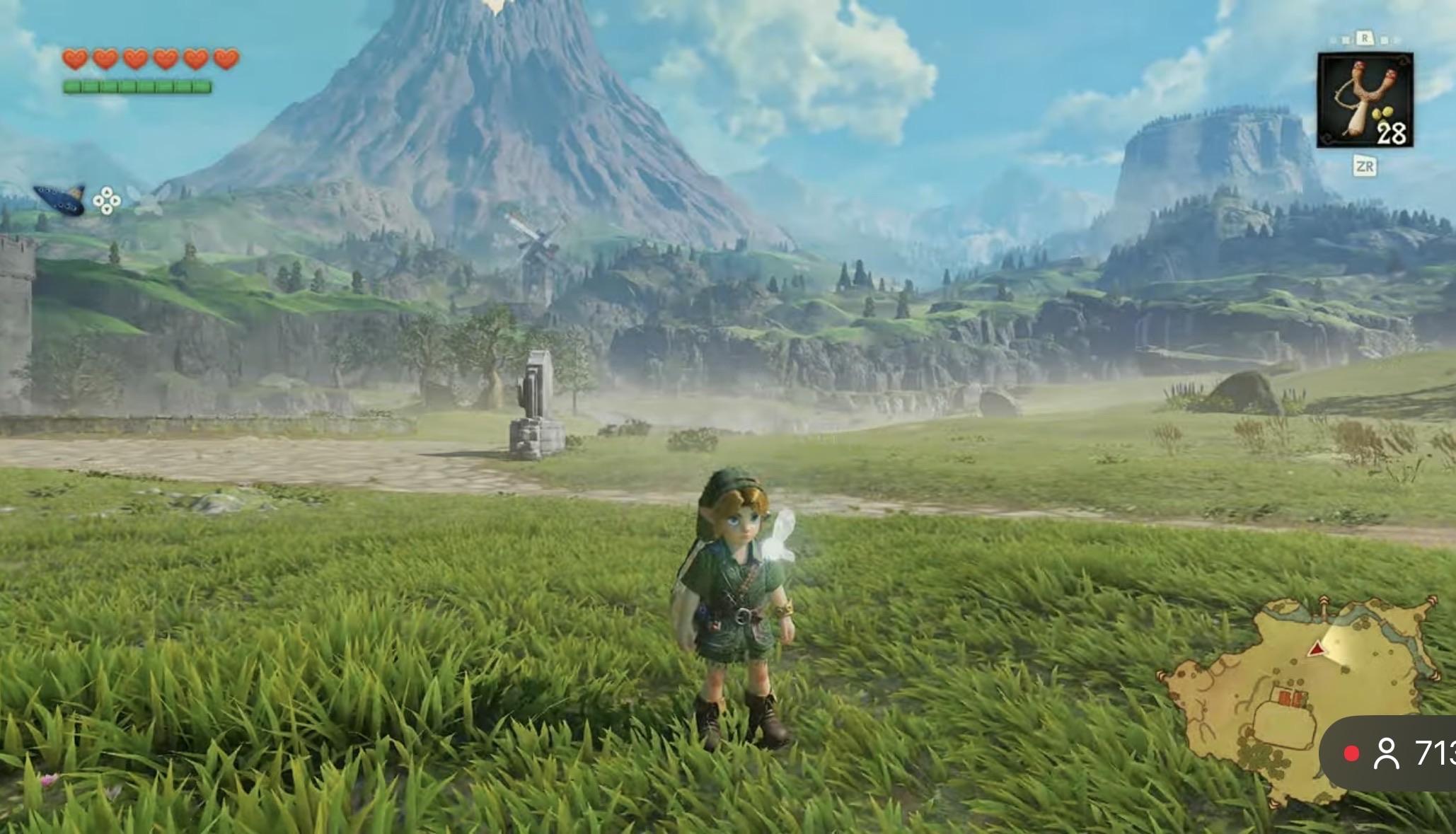
One word…Roblox. I have noticed a sharp degradation in the arts (music, filmmaking, etc.)over the last decade and half or so, and video games have not been immune to the shenanigans. Tik Tok, YouTube, dumb media, and Fast paced videos have rotten the minds of newer generations. How do you convince the kid who plays hours of Roblox (I still don’t know what kids see in that rotten game) to even give a try to an artistic masterpiece like The Legend of Zelda: Ocarina of Time Remake?
I suspect that, internally, Nintendo conceived this game as something of a love letter to Millennials who grew up in the 1990s and have now reached the point in life where they are buying Nintendo Switch consoles for their own children. In that sense, the remake feels designed to reconnect with the generation for whom Ocarina of Time was a life altering event.
At the same time, I’m sure Nintendo has a second, equally important goal: turning the next generation into lifelong Zelda fans. I was 13 when Ocarina of Time did exactly that to me, and now, at 41, I get to experience the remake alongside my 9-year-old. If Nintendo can create that same sense of wonder for him that the original created for me, then the game will have accomplished something far more meaningful than simply revisiting a classic.
But, somehow, it has to defeat Roblox. I just don’t know if kids today have any appreciation for art and story telling left, if the upcoming generation has any sort of saving grace, or hope of redemption, Ocarina of Time Remake might be the one game that can pull it off (save an entire generation of kids from Roblox). It would an extraordinary, if not, miraculous achievement, I know, which is why I will keep my hopes down.
5. It Won’t Have the Same Lasting/Legacy Impact Ocarina of Time Had
Something that is not often talked about is how Ocarina of Time broke new ground in the way games told their storylines. Final Fantasy VII gets more credit in this regard, but Ocarina told a simpler yet more personal storyline in a way that outlasted the format Squaresoft and other JRPG developers of the day told their stories. Most games today tell their stories utilizing real time cutscenes using the game’s engine.
As a result, storytelling in many Nintendo 64 games had to rely heavily on dialogue boxes and limited character animations. Important dramatic moments were often conveyed through text while characters stood relatively still, punctuating their dialogue with little more than grunts, gestures, and other sound effects. The limitations of the medium could make otherwise key narrative moments feel surprisingly static. Perhaps, one of the reasons JRPGS were mostly absent from the system.
Ocarina of Time would change that.
The Nintendo 64 might not have been capable of delivering the kind of pre-rendered CGI cinematics that defined games such as Final Fantasy VII due to the limited storage capacity of its media format, but its considerable processing power offered another solution: rendering polygonal characters and their animations in real time. Rather than relying on pre-rendered video to communicate emotion, Ocarina of Time could use the hardware itself to make its characters expressive.
Look closely at Link or any of the major NPCs—Malon is a particularly good example—and the difference becomes apparent. Even at close range, their faces feature clearly defined eyes, mouths, and noses, with surprisingly little of the pixelation and jagged edges that characterized many other games of the era. The characters could move, react, gesture, and convey emotion within the game engine itself.
Compare that with Final Fantasy VIII. While its pre-rendered cinematics were considerably more ambitious visually, its polygonal character models could look awkward when viewed up close, with faces sometimes appearing distorted or even deformed. Squall’s visage would look at times like an abomination of sorts.
This was one of Ocarina of Time‘s great technical achievements. It demonstrated that cinematic storytelling did not necessarily require pre-rendered video. The Nintendo 64’s hardware could instead bring characters to life dynamically, allowing the player to experience important narrative moments through real-time animation and facial expression. In doing so, Ocarina found a way around one of the N64’s most significant limitations—and helped establish a new standard for storytelling in 3D games.
Horse riding, enemy targeting, seamless transitions during the open world, etc. Ocarina left the building blocks that open world games nearly 30 years later continue to utilize.
Quite simply, Ocarina of Time was the most revolutionary, and perhaps, influential 3-D game of all time – a distinction it may share with Super Mario 64.
Where Ocarina of Time Remake Will Surpass the Original
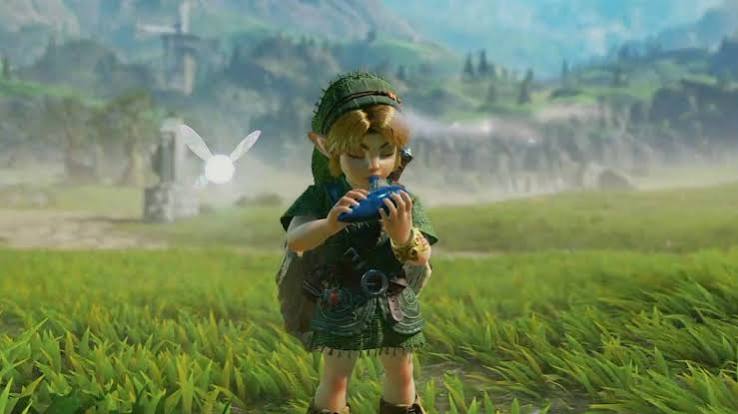
1. It Will Sell More (At least Officially)
We may never know exactly how many Nintendo 64 owners, out of the console’s approximately 33 million install base, played or owned Ocarina of Time, particularly given the prevalence of second-hand sales (and Block Buster Video/Rental outlets) in the 1990s. Despite its reported sales of around 7 million units, the game seemed to find its way into the hands of nearly everyone who owned the console.
What we do know, however, is that 2017’s The Legend of Zelda: Breath of the Wild has already surpassed 30 million units sold in less than a decade, demonstrating the franchise’s enduring commercial appeal and its ability to reach an audience far beyond its original generation.
You might say, “But Samuel, there are 155 million Switch 1 units around, and only about 23 million Switch 2 units sold!” Yes, that is a factor, but Nintendo decided to launch Ocarina of Time Remake mere weeks before GTA VI flips the gaming world upside down.
The Switch 2, a year and half into its life cycle, lacks a “killer app”, “a console seller”, and Nintendo is banking on Ocarina of Time Remake to do just that, sell consoles… or tablets… or whatever you describe the machine as.
Pre orders for this remake have been off the charts with Nintendo admitting that they weren’t prepared for the massive demand. Ocarina will break records on Switch 2 (mostly based on the Love and reputation of the original game), but also because the Switch 2 hasn’t had a “killer app” since launch.
2. It Will Be Given Modern Standards, A Better Game Than The Original is Today
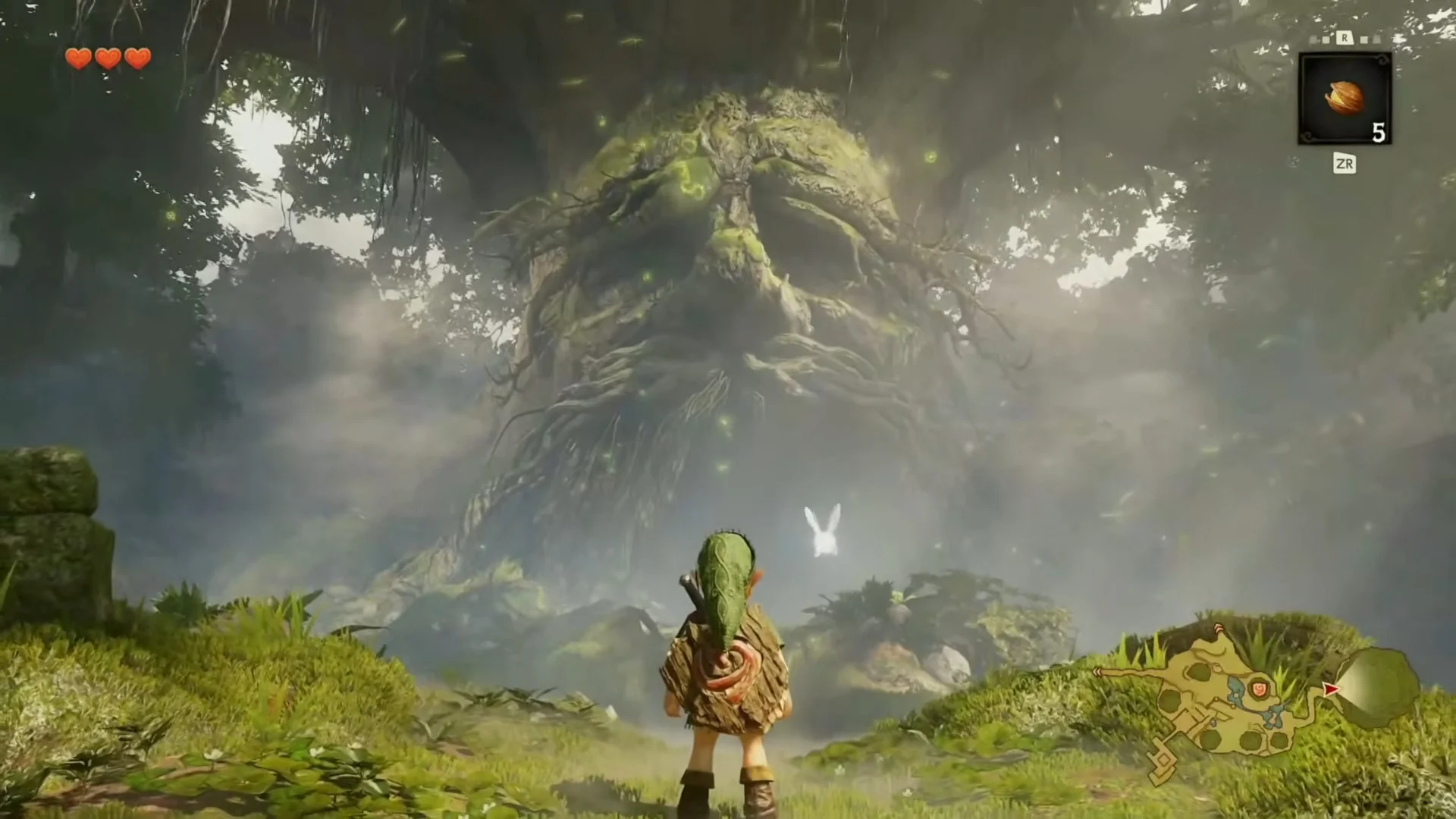
Technology changes, and with that, improvements in games are to be expected. The Camera (which was excellent in the original) will be improved thanks to the existence of a second joystick. Link now has the ability to jump at will, which will change exploration and gameplay presumably for the better.
This is not a vanilla remake, and Nintendo is expected to add some content (such as extra items and collectibles, etc). In other words, I expect a larger, longer version of the my favorite game of all time here.
The games visual overhaul is massive and it will be a more appealing play than the original is at this point, even if the game doesn’t get the 10/10 scores that the original had everywhere.
3. Depending on the Game’s Quality, Ocarina of Time Remake will finally replace the original in Most (not 1990s Kids) People’s minds (especially in Younger Generations)
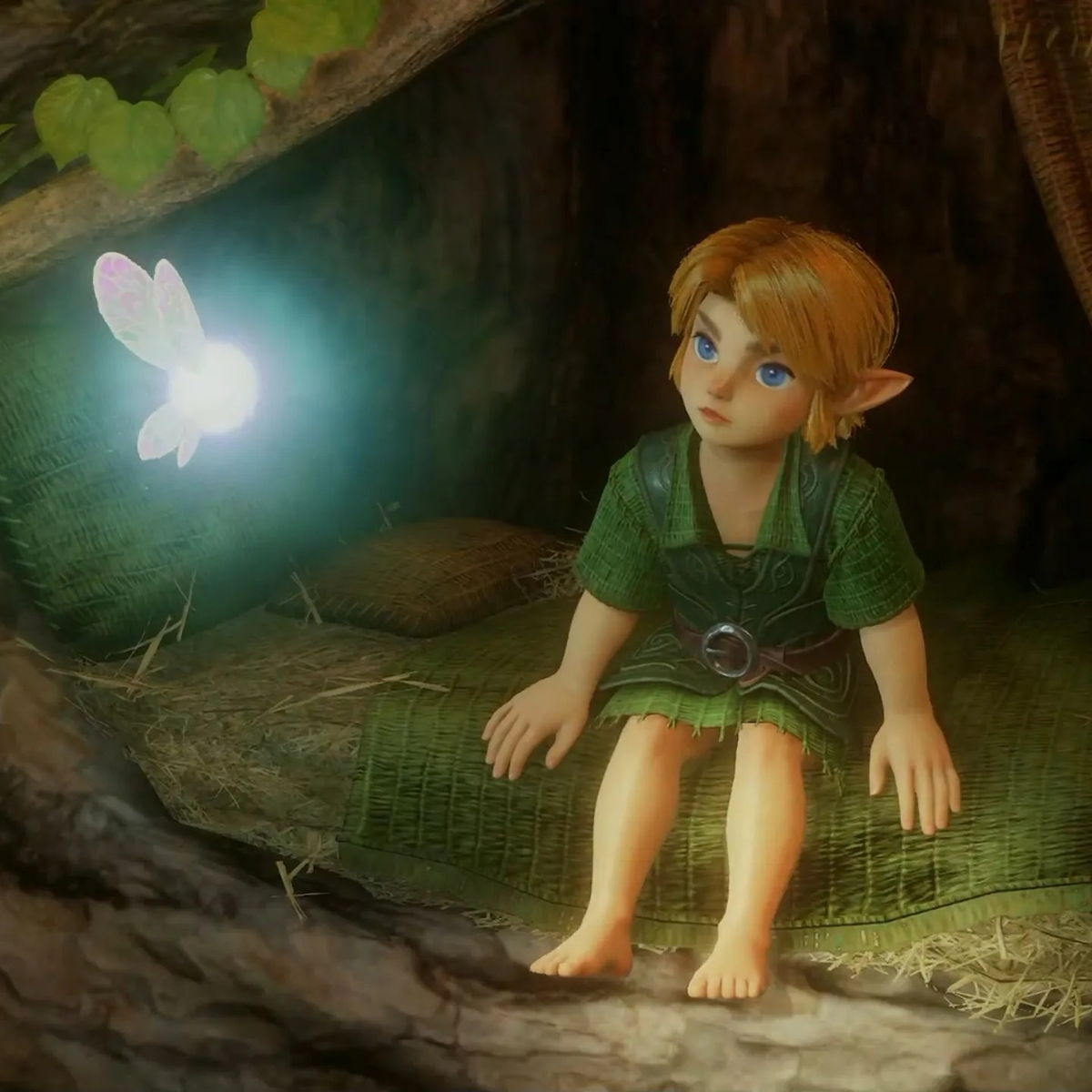
The younger Alpha and Beta generations will never understand the greatness and just pure revolutionary impact of the original game. It is what it is. That said, they will likely love this one so much, that unless they are curious they will not return or play the original masterpiece ever again.
The fact that the 3DS remake was never “re-released” meant that the original was still the only way to relive the classic on the Nintendo Switch (and Nintendo Switch 2), and that will all change on November 5th, 2026. The voice acted cutscenes and expanded musical features of the Ocarina will only serve to reinforce this as the absolute version of Ocarina of Time to play.
10 years from now, the original 1998 Ocarina of Time will be a distant memory, and it hurts…but such is life. We all age and die, given the propensity of the industry in Remaking great former games every so often, I guess even digital art has an expiration date.
We had a great run 1998 Ocarina…We certainly did…I guess you will now turn into a Museum piece, and a curiosity item.
4. Ocarina of Time Remake Will Be Larger in Terms of Real Estate and Replay Value
I’ve lost count of how many times I’ve completed the original Ocarina of Time, including achieving 100% completion. I stopped keeping track decades ago, yet I always found my way back to it. That said, unless I’m revisiting it for comparison purposes, I don’t expect to return to 1998’s Hyrule anytime soon.
The new Ocarina of Time has faithfully recreated the original’s art direction and magical atmosphere, and I’m confident Nintendo has expanded the experience into a larger adventure. I suspect I’ll be playing this game for years before I even consider picking up another open-world title or action RPG—unless, of course, reviewing one for the site requires me to do so.
The original Ocarina of Time occupied my teenage years and much of my twenties. I have a feeling this new incarnation will do the same for my forties. It will happen, I just might have to buy another Switch 2 in order to do so, as my Kid will likely complain about my gaming habits.
5. It Might Save Single Player Gaming…By Virtue Of Being A Savior in a Dark Period for Video Games
While the original game was the King of Games, and has been since its release (at least in terms of critical appreciation), single player quality Gaming has been in a slow but agonizing decadence over the last 5-6 years or so. Even Sony, once renowned for cinematic single player experiences, is chasing (and continuously failing to create) the next “Roblox”.
The Original Ocarina of Time didn’t save gaming. Instead, it showcased what gaming could be. And for that, it is venerated. The 1990s were a different time, it was a the golden age of games, and gaming was continuously expanding and continuously innovating into the 3-D space (which was very new then). Micros-transactions, nonsense politics, and “forever” games, were not a thing then.
Sony has yet to deliver a true generation-defining game, and one could argue that Microsoft has struggled to do the same. Could Ocarina of Time, which defined a generation back in 1998, achieve that feat once again? It’s difficult to say, but I have little doubt that the Remake will sell like hot cakes . More importantly, its success could encourage executives to reconsider the industry’s growing reliance on games with budgets exceeding $500 million and instead invest in smaller-budgeted, high-quality experiences. A remake of Ocarina of Time could demonstrate that there is a substantial market for games that prioritize craftsmanship, creativity, and quality over sheer production scale.
More importantly, it might dissuade Sony from its fruitless pursuit of a “forever” game.
Given rising console prices, Roblox, and Political agendas pushed in games…it is up to the Hero of Time to save not just Hyrule, but proper Gaming at this juncture.
In Conclusion
The Legend of Zelda: Ocarina of Time Remake will be my favorite game of all time – after the original – of that statement I have little doubt. That said, it will never match the original’s impact, and innovation, and it will likely lose GOTY honors to GTA VI. Still, I do hope I am wrong on this account, and Nintendo’s legendary game will once again stun the gaming world 28 years after its historic launch.
Agree with the author? Couldn’t disagree more and are frothing at the mouth to tell him? Leave a comment here, on Facebook or send an email and make sure to follow Never Ending Realm on Facebook, Twitter, and YouTube!