After the Summer of “Hate” that Sony suffered when it unveiled its final plans for a digital only future – while keeping their archaic digital storefront platform in place – it seemed that a small window of opportunity for Microsoft (Xbox) had opened.
Never mind that Phil Spencer and his failed “Everything is an Xbox” policies were both cancelled. That new CEO Asha Sharma fired half of the Xbox gaming division. That Game Pass completely missed subscription targets by 1000 miles. And, that the Series consoles were abysmal sales failures compounded by price increases of the hardware, and Spencer’s ill fated decision to go “multi-platform” with Xbox exclusive games.
Phil, basically, did his best to kill the Series consoles just when things appeared to be about to turn around with a slew of exclusive Xbox releases amidst Sony’s draught of meaningful exclusive titles.
Sony’s decision to start an all digital future in 2028 – despite all of the aforementioned Microsoft misfires – left a huge gap of opportunity for the Xbox brand to make a comeback.
Microsoft is Lightyears Ahead of Sony with its own Digital Store Front Thanks to “Xbox Play Anywhere”

Hindsight is 20/20. That said, it appears to me that Phil Spencer significantly mismanaged many of the policies and systems implemented during his tenure at Xbox.
Much of Spencer’s focus was placed on Game Pass and the broader “Everything is an Xbox” strategy. However, that approach not only diminished the relevance of Xbox’s primary hardware platform—the Series X|S—but ultimately had the opposite effect on Game Pass subscriber growth.
Game Pass certainly had the potential to become a major success, but for that to happen, the Series X|S would have needed to achieve considerably stronger hardware sales. Realistically, Xbox would have needed to sell at least 60 million consoles by this point to establish a sufficiently large potential user base. Instead, Sony has reportedly sold approximately 95 million PS5 consoles, while Microsoft has moved only around 35 million Xbox Series X|S units.
It is difficult to reach a target of 100 million subscribers—or even the reported 77 million benchmark for 2026—when the primary platform capable of driving that subscriber growth is not selling at a competitive scale.
This is one of the reasons I was highly critical of Spencer’s decision to pursue a multiplatform strategy in 2024. Certainly, Spencer was likely under significant pressure from Microsoft leadership to make the Xbox business more profitable, potentially under an “adapt or else” mandate. However, the decision arguably eliminated what little incentive remained for consumers to purchase an Xbox Series console. And without a substantial installed hardware base, Game Pass was never going to achieve the level of growth Microsoft appeared to be targeting.
Then came the Game Pass price increases, followed by the appointment of Sharma to replace Spencer. Thankfully, Sharma appears to have reversed much of the multiplatform strategy that Spencer had established. If Microsoft never intended to kill its hardware business, then pursuing a broad multiplatform strategy made very little strategic sense. It effectively stunted the very hardware ecosystem that could have helped sustain Game Pass.
That, ultimately, is one of the defining contradictions of the Spencer era.
The industry’s gradual movement toward an all-digital future—and eventually toward cloud-based streaming as the dominant method of game consumption—has been developing for more than a decade. In many ways, this transition was inevitable. Unfortunately, it is also a direction that comes with significant consequences for consumers, hardware ownership, and the traditional console business model.
However, if you are going to “screw gamers over,” then you need to offer them something in return—something that cannot simply be replicated with a physical copy—when taking away traditional ownership and resale rights for products they have purchased and paid for.
Sony does not appear to fully understand this concept, perhaps because it is currently winning the console war against Microsoft. Microsoft, however, has understood this principle for roughly a decade. This is where Xbox Play Anywhere becomes particularly relevant.
Xbox Series When Paired With an Xbox (or Regular) ROG Ally (or any Windows Handheld) Works Like Nintendo Switch 2…Sort Of…
When you purchase an Xbox Series console, you gain access to a digital ecosystem consisting of more than 2,500 Play Anywhere-enabled games, including a significant number of AAA third-party titles, with the library continuing to grow. With a single purchase, an Xbox Play Anywhere title provides access to the Xbox version as well as a digital PC version at no additional cost, which can then be played on virtually any compatible Windows PC.
More importantly, from my perspective, this extends to Windows-based PC handhelds such as the ROG Ally. Your saves and progression carry over between devices through your Xbox account, allowing you to seamlessly transition from one platform to another.
Essentially, you are getting two versions of the same game for the price of one.
For example, you could play Crimson Desert at high fidelity on a 4K television using an Xbox Series X, then, if you need to leave the house, travel, or simply want to continue playing elsewhere, pick up a Windows-based PC handheld and resume your game with your progress intact.
From a convenience standpoint, that is remarkably compelling. In some respects, it offers many of the same advantages that make the Nintendo Switch 2 so appealing: the ability to enjoy a high-quality console experience at home and then take that experience with you when you leave.
The important distinction here is that Microsoft is attempting to provide that flexibility without requiring you to purchase the game twice. In an increasingly digital-first industry, that kind of value proposition could be extremely important if consumers are ultimately being asked to give up the traditional benefits of physical ownership.
Given Sony’s current blunder with their tyrannical digital program and store front…Why hasn’t and isn’t Microsoft doing some clever marketing with this most awesome feature? Keep in mind, that working on Xbox’s executive branch are people who make 6-7 digit salaries per year, and yet, no one seems to figure out that they have a golden goose here, and that Sony literally left the window of opportunity open for Xbox to rise from the ashes with Asha. But alas, I am just a simple retro game journalist.
Those Rich Execs Did Not Learn The 2013 Lesson, and Have Pulled a Second Don Mattrick Stunt in This Most Critical of Times
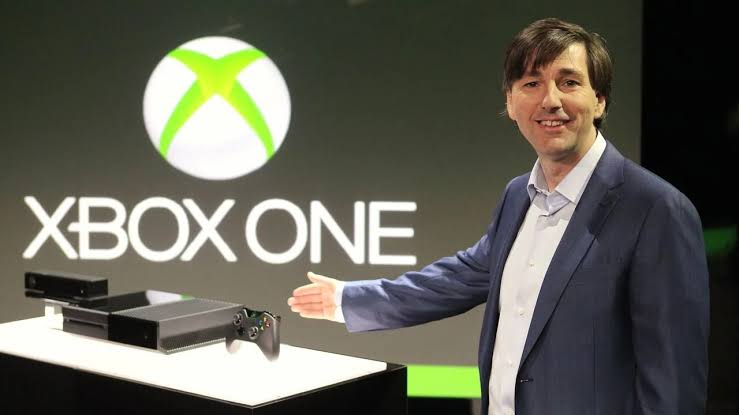
With the window of opportunity wide open—and with Microsoft benefiting from significant goodwill and positive momentum following its recent physical-to-digital conversion program, ironically a remnant of the infamous Mattrick-era fiasco—things appeared to be going very well for Xbox.
But Xbox has developed a reputation for repeatedly shooting itself in the foot. So why stop now? It would hardly be fair to let Sony have all the negative publicity, right?
Enter the “Game Pass Cloud Restrictions Fiasco.”
Under Microsoft’s new policy, cloud streaming allowances are tied directly to a user’s Game Pass subscription tier. The limits are pretty restrictive: subscribers paying $9.99 per month receive only five hours of cloud streaming per month, those paying $14.99 receive ten hours, while Ultimate subscribers paying $22.99 are granted a staggering fifteen hours of monthly streaming.
And yes, users can purchase additional streaming hours—but they must pay for those hours regardless of how much they are already spending on their Game Pass subscription.
Microsoft has stated that only approximately 4 percent of Game Pass subscribers will be affected by the change. Personally, I have little interest in game streaming. My own experiences with streaming games have been, to put it mildly, nightmarish.
But that is not really the point.
Look ten years into the future, and there is a very real possibility that the overwhelming majority of games will be streamed rather than played locally. As AI continues to accelerate technological development and potentially contributes to the decline of traditional consoles and dedicated gaming hardware, cloud gaming could eventually become the dominant method of accessing games.
And this is where Microsoft appears to be repeating its biggest mistake from 2013.
The company is once again telling consumers what the future of gaming is likely to look like—but instead of allowing that future to develop organically, Microsoft seems determined to implement it prematurely.
That is essentially what happened in 2013. Microsoft attempted to push consumers toward a future they were not ready to accept, and all hell was unleashed upon them by consumers. The difference today is that the consequences are unlikely to be nearly as severe. Xbox hardware sales are already struggling, so there is arguably far less room for the company to fall.
Nevertheless, the timing is terrible.
At a moment when Sony has been making a series of questionable decisions and taking considerable criticism from consumers, Microsoft had an opportunity to capitalize on that negative sentiment, rebuild goodwill, and position Xbox as the more consumer-friendly alternative.
Instead, Microsoft has once again managed to step on its own foot.
The irony is almost impressive. Keep in mind, the people behind these decisions are being handsomely paid for their blunders.
AI is the Bane of Our Existence…Especially if You Are Into Console Gaming
The rising costs of consoles from a 2020 $499 standard pricing to today’s Xbox Series X’s $749.99 – and I believe $649 for a base PS5 – have been absolutely astonishing. Even the Switch 2 got a $50 dollar increase in price this month. AI data centers and growing usage require RAM…lots of RAM, and Storage like SSD Drives. Those two are vital components to any PC or Console device that plays games.
What this means is that the PS6 and whatever the next Xbox ends up being called will both cost $1000 plus each and will have no disc drive. Sales will likely tank during that generation, and fast internet provided by companies like Starlink will likely spread to remote areas in the world that formerly didn’t have speedy internet, or internet access at all. Streaming will take off, and both Sony and Microsoft (and likely Nintendo) will start offering monthly plans in order to access their cloud (which is what Microsoft is doing now in sort of beta form) services.
You see AI takes up cloud space as well, and thus, such space will come as premium. The PS7 (and next NEXT Xbox) will likely be pure streaming boxes (no hardware inside), or perhaps even a TV app of some sort, and you will be allowed to game from the cloud…at a fee. Dystopian for sure.
But when governments try to take something from you – my 2A brethren will agree – it is not about your well being, but about them gaining more control over you. When companies achieve their ultimate end goal of forcing you into a “Full Streaming Future” it won’t be about benefiting you either. It will be about making more profits by exerting full control over you…even the amount of hours you are allowed to play…before you have to pay more.
It will probably start with something along these lines:
“Hardware has become too expensive, and consumers are no longer buying consoles because of it. But with this $499 streaming box, we can deliver all of the major gaming experiences at a fraction of the cost of traditional hardware—to you!”
Never mind that you will likely have to maintain multiple subscriptions and purchase separate licenses to access different games through various streaming services. Within a matter of months, those recurring costs could add up to what you would have otherwise spent on a $1,000 console.
There is, however, one crucial difference: you will own absolutely nothing.
But they will call it progress.
And Generation Alpha will cheer.
Such are the times we live in. Still, that Xbox Play Anywhere feature…is really good. Microsoft should take notes, and use it properly in its marketing. It is the one feature Sony can’t mimic or even attempt…yet.