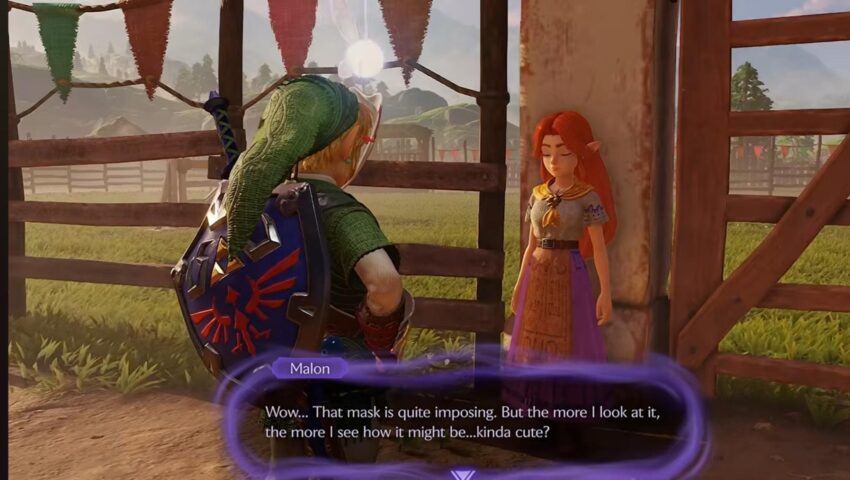
Before we get further, context is important. I am not presenting this complaint because I want to fuel the “conservative vs woke” wars. Certain key references to Link being a “man”, a “real man”, a “handsome man”, and yes, even a “cruel man”. Were curiously removed from western versions of the game, despite the game’s script remaining loyal to the original storyline in the Japanese versions of it.
So, before my rant goes any deeper, here is the following context:
*Disclaimer: Chat GPT was used to compile the list
Confirmed/reported dialogue changes
1. Kakariko Village – Gate guard (Keaton Mask)
-
Japanese: Refers to his son as 「息子」/ boy.
-
Original English (1998): “My boy’s favorite.”
-
American remake: “My kid’s favorite.”
-
Change: Boy → Kid.
2. Lon Lon Ranch – Malon
-
Japanese: 「妖精クン」(Yōsei-kun, fairy boy).
-
American remake: “Fairy child.”
-
Change: Boy → Child.
-
This also appears in her dialogue asking Link to play the ocarina.
3. Goron City – Darunia (before Dodongo’s Cavern)
-
Japanese: 「オトコになってみな」(Otoko ni natte mina).
-
Meaning: “Go and become a man.”
-
Original English: “Become a real man!”
-
American remake: “Show me what yer made of!”
-
Change: The entire reference to becoming a man is removed.
4. Goron City – Darunia (after defeating Volvagia)
-
Japanese: 「オトコの中のオトコ」(Otoko no naka no otoko).
-
Meaning: “A man among men.”
-
Original English: “You turned out to be a real man.”
-
American remake: “From tough little pip-squeak to tough big pip-squeak.”
-
Change: Both references to manhood are removed.
5. Kakariko Village – Impa (after Shadow Temple)
-
Japanese: 「勇気ある少年」(Yūki aru shōnen).
-
Meaning: “Brave boy.”
-
American remake: “Brave one.”
-
Change: Boy → One.
6. Water Temple – Princess Ruto
-
Japanese: 「酷い男」(Hidoi otoko).
-
Meaning: “Cruel man.”
-
American remake: “Truly heartless.”
-
Change: Man → Heartless.
These six examples are specifically identified in a fan comparison of the Japanese and English remake scripts.
These have been mentioned by players, but I would not yet classify them as confirmed Japanese-to-English discrepancies.
7. Lost Woods – Fado
-
Original English: “You’re a real man for coming up here.”
-
Remake English: The manhood reference is reportedly removed.
-
-
Players report that his original “real man” wording was removed or rewritten.
-
The exact Japanese remake equivalent has not been independently established.
Japanese remake wording still needs direct verification.
8. Kokiri Forest – Mido
Related change: Nabooru
9. Spirit Temple – Nabooru
-
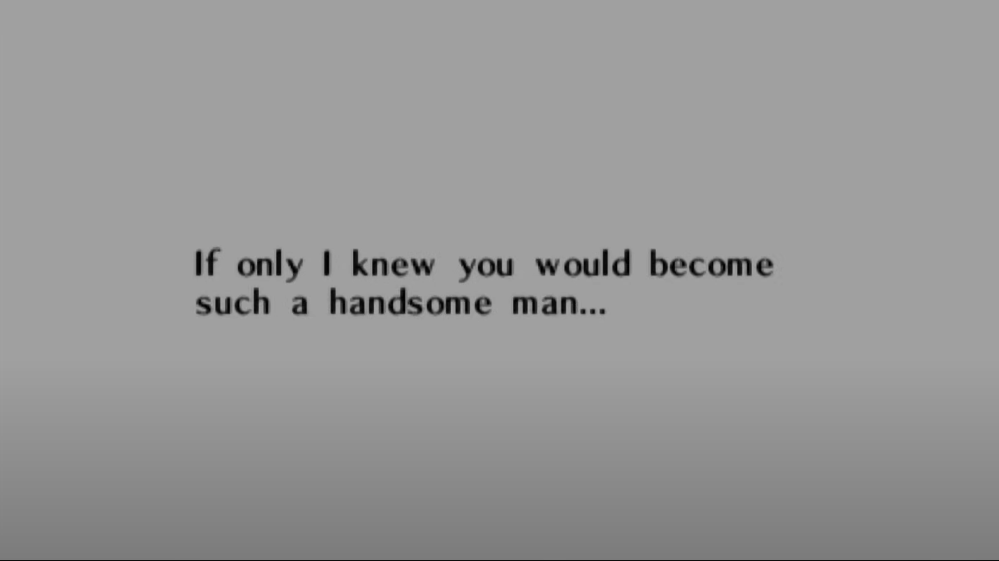
Original English: “If only I knew you would become such a handsome man…”
-
American remake: The handsome-man remark and its suggestive implication are removed.
-
This is a related change, although it is not a direct boy/man-to-neutral-word substitution.
-
Nintendo of America and its Translators Have A LOT to Answer for Here
Before I get called names – that I assume I will by the liberal left – if you can’t see a clear pattern in the changes above…you are either lying to yourself, or have issues. While Nintendo of Japan has said that some of the dialogue has been changed to appeal to “modern audiences”. The Japanese version didn’t quite change the storyline to appeal to these “audiences”.
Is it because the Japanese are not going to take the shenanigans without complaint? Or, is “modern audiences” a polite reference to “western audiences”?
Yes, I am conservative, hate me if you must for it. But what has happened here – the change to make Link appear as a “gender neutral” entity – should concern anyone who cares about commonsense and just the plain “truth”.
Ocarina of Time’s Link was/is/will forever be a boy. It is simple. He is also a boy that happens to be popular with girls within the story. Basically, every girl he meets has a crush on him – even older Nabooru. It is part of the storyline, and part of the charm of the entire thing. This fact didn’t stop girls from playing the game in 1998, and I assume it won’t stop girls from playing the Japanese version in 2026.
So, who is Nintendo of America trying to appease here? Hollywood? Alexandra Cortez? 1% of the population? Who!?
When Link takes Epona away – from Ingo – in the Remake, you can see a joyous scene where Malon fawns over her hero in shinning Armor. “Fairy Child” be damned, Link is her Fairy Boy. He always was, and will always be. Even in the cannon, Link presumably ends up with her – hence his Farm Boy descendant. The “Damsel” in distress premise has always been a The Legend of Zelda staple.
What is odd here is that Link is referenced – properly I might add – as a “boy” in other areas (Impa once, and Kaepora near the end of the game) of the Remake, which makes the “gender neutral” shenanigans even more damning – or perhaps an oversight by the English translator.
Even Princess Ruto, Link’s Fiancee, never actually calls him “boy” or “man” despite doing so in the English Original Game (and the Japanese version of the Remake). There is a clear aversion to state the facts and to just flat-out say Link is a man.
Ah, but the one – no hate towards him – carpenter calls him “handsome” when rescued. That bit of text “miraculously” survived? So, it is okay for a Man to call Link “handsome”, but not okay for a woman – Nabooru – to do the same?
What is the implicit message here? Being “homosexual” is fine, but being “straight” is not? Is that the message being carried out to children who play this in 2026? Food for thought.
Why would one reference from a carpenter (minor NPC) inconsequential to the story, not change, but one reference from a young woman (major NPC) very consequential to the storyline – and her character – be changed so drastically?
Is Nabooru finding Adult Link Handsome a grave evil now? What are we doing Nintendo?
Since everybody – and their momma – is offended by something now in western culture…I will add myself to the mix.
As a straight male, a husband and a father of a boy. I feel offended by these changes.
But no one will care, because I am a straight male, a husband, and father of a boy…and we are not part of the “modern audiences”…at least according to Nintendo of America, or so it would seem.
Even Darunia calling Link a “real man”, you know, a coming of age story? Has been blatantly axed.
If No One Stands Firm…It Will Get Worse
If no one complains about these key story changes for fear of being “cancelled”, then things will get worse, much worse, even within Nintendo’s own games over the following years. So, I have decided to take a stand myself. I have a boy, and I don’t understand why he can’t play a game that reinforces that it is good to be a “boy” and a “real man” like the original game did.
A large part of the dark nature go the game is the fact that Saria can never be with his Childhood/middle school crush, Princess Ruto will never marry his fiancee, Zelda has to send him back in time because she always does the “right thing”, and Nabooru will never be able to “keep her promise” to Link because she shared the same fate that two of the other love interests did.
In other words, Link broke a lot of hearts, and even got his own heart broken – seeing his fate in Twilight – it is a boy meets girl story. A proper 1990s tale, you know, before things got dark in the real world.
For someone reason, someone at Nintendo of America decided to tinker and go through the trouble of changing things – for the worse – that would have still made sense today.
The Ocarina of Time Remake Remains a 10/10 game to me. I am just saddened to see it go to the dark side…like sadly a lot media has gone to over the last decade and a half or so.
..And you if you think I am *insert offensive name* for calling it like it is… Ask yourself this: Why didn’t the Japanese version of the game change from the original? Why are only Western Audiences targeted by this agenda? What is going on?
The Never Ending Realm does not necessarily agree or disagree with the opinions, views, or statements expressed by the writer. All opinions expressed in this article belong solely to the individual author and do not necessarily reflect the views or positions of The Never Ending Realm, its staff, or its affiliates.