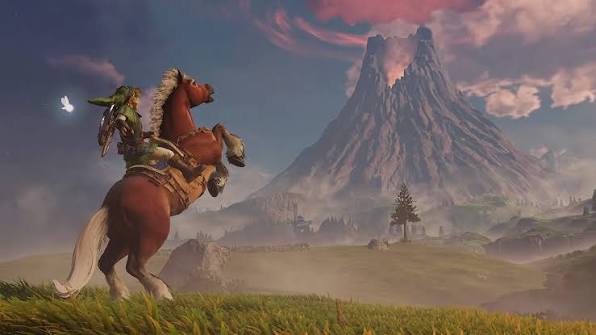
At this juncture, I don’t know if I can say anything that hasn’t already been said about Ocarina of Time Remake. My perspective might seem unique. I played the original in 1998 for 1000s of hours to no end. The game was a life altering experience for me (I even have a sleeve tattoo about the game), and to this day, I still consider it the finest game ever made…bar none.
But I am sure others – many who may be reading this review – have had similar experiences with the game. If you have read my work on this site, you already know what Ocarina of Time means to me.
As such, the moment this Remake was announced, I didn’t know what to expect. Yes, I recognized that it would be impossible for the Ocarina of Time Remake to deliver the same jaw dropping, revolutionary experience in 2026 that the original did in 1998. But my questions where more about how the game would change over the original.
Nintendo Unexpectedly Chose… The Expected Path?
Would Nintendo change the game’s design? Create a massive Hyrule Field in the post Breath of the Wild era? Introduce new side quests? Surely, open world games have gotten bigger, and more crowded in terms of content since Ocarina of Time first established the genre in 3-D 28 years ago. Nintendo surely wouldn’t just release a 1:1 remake while expecting a great reception? Not in 2026? Not in the looming approaching shadow of Grand Theft Auto VI?
We already had Grezzo’s 3DS 1:1 Remake. Nintendo wouldn’t release a 1:1 Remake…I was convinced.
Then came the second trailer. You know, the trailer that made me laugh hysterically while crying (literal streaming of tears as a 41 year old man) in front of my bewildered wife. The game looked stunning, epic, a tad different…and yet, very similar. I came away thinking it would be a standard 1:1 Remake with a larger world and packed with extra content.
I was wrong – sort of – in the “larger world” and “extra content” bits.
Nintendo…perhaps, in an act of bravery, chose the path of “least” resistance. It simply trusted 1990’s Miyamoto and Nintendo EADs brilliance. The Legend of Zelda: Ocarina of Time Remake is a 1:1 remake of the greatest game ever made – and yet – it is so much more.
Why Mess With Perfection? Shigeru Miyamoto Remains Undefeated
If you read Nintendo’s own interviews with the development team, you won’t learn the “secret sauce” of why the Remake captured both: the magical dream feeling, and dark mood of the original. But, you will come away with an understanding of why Nintendo EAD chose to go with the 1:1 treatment when it came to the game’s original design.
Shigeru Miyamoto is the best Game Designer that has ever lived. He is a genius … and I don’t throw that word around lightly. I don’t really consider anyone else in the gaming industry’s history to be a genius – let alone – on Miyamoto’s level.
Nintendo is blessed that he fell into the company in the late 1970s. He landed a role an artist, impressing – then Nintendo President – Hiroshi Yamauchi – with his handmade Toys. Miyamoto was initially a toy maker, he was a designer a heart, and he designed toys. Nintendo placed him as an artist for its video games, but he quickly rose up the ranks by designing games that were more than just pixels on a screen.
Miyamoto made games with thought, artistic vision, and creative fun behind them. He created long standing – if not immortal – genres with Super Mario Bros, and The original the Legend of Zelda. He was a problem solver, and he was a magician.
Sega had Suzuki and Naka, neither came close to Miyamoto’s brilliance. Sonic, nor Shenmue (or Suzuki’s arcade hits) could save Sega from tanking. Sonic has, after its golden 2-D 1990s run struggled to gain critical acclaim.
Sega never quite transitioned the series to 3-D in the way Nintendo transitioned Mario and Zelda. Sonic hasn’t had a great game since Sonic 3. The difference? Sega didn’t have Miyamoto, and Nintendo did.
Sony has been commercially successful for 3 decades. It has been mostly relying on 3rd party hits until the late PS3 era – into the PS4 peak – where Naughty Dog, Santa Monica Studios, and Insomniac delivered polished exclusive hits. These hits relied on Hollywood caliber story telling, and stunning visual offerings.
While their gameplay was polished…none of these games had a lasting design – in terms of gameplay – genius behind them. Sony is suffering from an identity – and creative drought – crisis right as we speak. Sony closed Japan Studio (the one studio with unique creative ideas behind it). If it wasn’t for Team Asobe’s Astro Bot, I would argue that the magic was completely extinguished in Sony’s creative portfolio.
Microsoft…has nothing, and this has shown to be true in the decline of its hardware sales (despite doing all of the right things in terms of Xbox Game Pass, and Xbox Play Anywhere).
Even the once mighty Hideo Kojima – Metal Gear Solid’s creator – has struggled to break away from his one stellar creation as Death Stranding missed the mark with most people. Even Sony saw him as an expense – rather than an asset – letting him walk away to Microsoft.
Apart from Guerrilla’s upcoming – at some point – closing of the Horizon trilogy. I have nothing to look forwards to playing in my PS5. Forbidden West, remains the most powerful reason for owning a PS5. Unlike, Nintendo’s hits, Horizon Forbidden West relies more on technical prowess and storyline than on actual ground breaking gameplay. Those two areas have made it a costly long endeavor – in terms of development – a common trend in Sony’s first party lineup.
Once you grasp the dangers of Sony’s expenditure of massive budgets in its first party – story driven lineup – to increasingly shorter – if any – returns on profit, it becomes easier to understand why the company keeps chasing its own “Roblox” type of hit.
Sony doesn’t have a creative identity, and what worked on PS4 is no longer working on PS5, and thus, we get massive flops like Concord being conceived and invested in.
Quite simply, Sony doesn’t have Miyamoto, or a Studio founded by him, and Nintendo does.
This is why Ocarina of Time Remake – on a rumored 40 million dollar budget – will, in a span of a few months, outsell the recent trickle of PS5 exclusives, and more importantly will make several times the profit margins that any Sony title has made over the course of this generation.
Shigeru Miyamoto might no longer be directing games with the same involvement he was in the 1990s, but Nintendo doesn’t fire employees, it hires the best talent, and grinds into their collective consciousness the ‘Miyamoto way’, and thus, Miyamoto’s vision for how games should be designed lives on to this day. You can see and feel his influence in BotW and Tears of the Kingdom.
While it may seem like this review has taken a ‘Miyamoto is a Genius’ path, the fact is that you cannot separate The Legend of Zelda: Ocarina of Time Remake from him. The game follows the original Ocarina of Time so fervently, and that in certain ways, it is the best homage Nintendo has ever done to Shigeru Miyamoto.
Ocarina of Time is Miyamoto’s baby, and in turn, his trump card. Nintendo followed his original vision with such reverence that The Legend of Zelda: Ocarina of Time Remake is the greatest game I have ever played … after the original of course.
It doesn’t do what Ocarina of Time did in 1998 – no game ever will – but IT – in 2026 – confirms what we have known all along: The Legend of Zelda: Ocarina of Time is greatest game ever made.
The Legend of Zelda Ocarina of Time Remake Might Not Save Modern Gaming … But The Game is a Reminder that Nintendo EAD in the 1990s Was Decades Ahead of Everyone Else…and That in 2026…THAT Nintendo EAD from the 1990s Remains Decades Ahead of Everyone Else
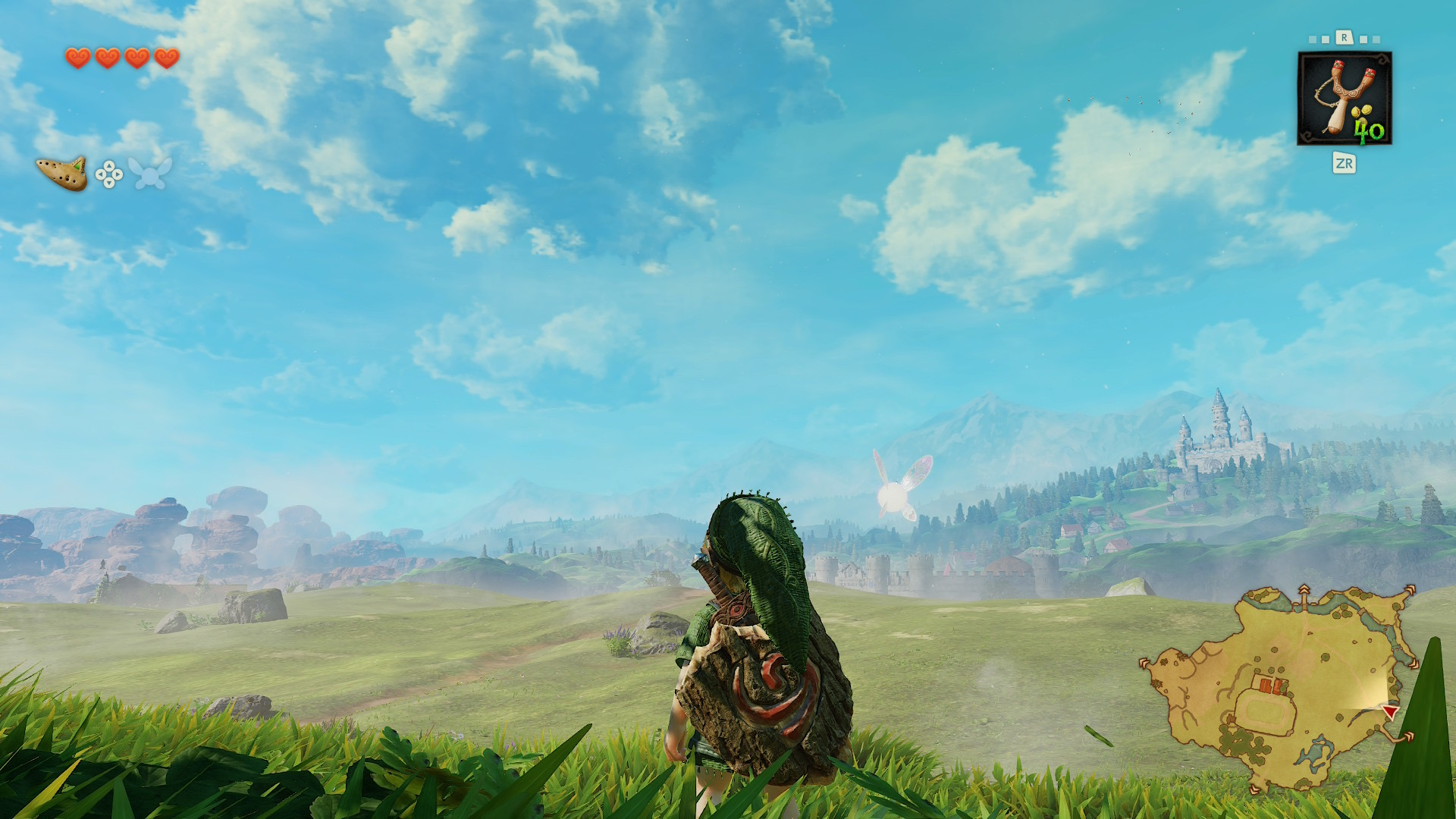
In the most basic of explanations: Nintendo EAD gave the original Ocarina of Time a ‘from the ground’ visual overhaul to match 2026 gaming, and just like that, it remains the best game ever made (as showcased by the high Metacritic scores). I wouldn’t be wrong if I left the review here. This is basically, Ocarina of Time, with a gorgeous re-paint, and it remains the greatest game I have ever played.
But that would be a disservice to what the younger Nintendo EAD guided by Eiji Aonuma – who in turn was chosen by Miyamoto as his Zelda replacement – accomplished here.
The Final Fantasy VIIR trilogy, which is not a Remake, but a sequel that threads much of the same iconic moments of the original went for a full gameplay, and world design revamp of the original game.
The reason?
Aside from Storyline, Music, and Artwork, Final Fantasy VII aged somewhat poorly – in level design – thanks to the constraints of utilizing static pre-rendered backdrops, and a miniaturized 3-D world map in 1997. The immersion wouldn’t approach the original’s in the modern era unless the game was brought properly into the 3rd dimension.
Square Enix succeeded for the most part, but the fetch questing (which was improved on Rebirth over Remake) and largely drab over world (which looks a generation behind) lacked a spark.
The Legend of Ocarina of Time has no such immersion issues. The 1998 Original courtesy of the Nintendo 64 hardware and Miyamoto’s brilliance was a properly scaled up 3-D experience. It plays and looks just like..say… the Witcher III does today, but with 1998 visuals and more polished controls (yes, even back in 1998, Ocarina was a ahead of most modern games in the tight feel of its controls).
As such, Nintendo was faced with a dilemma: Destroy Perfection, or fine tune it.
The decision was easy, the developers went with fine tuning the experience while largely keeping 95% of the original game design as Miyamoto had originally envisioned the game.
It would be a test of time – no pun intended – for the greatest game of all time.
Could what was once considered ground breaking, revolutionary and genius design, survive 3 decades of technological leaps?
I am glad to report that it RESOUNDLY did. Heck, it might have gotten even better with time.
Grezzo Tried The Same Feat in 2011 with The First Remake…But Something Was Missing
Now, unlike Nintendo EAD, Grezzo crafted a Remake that was 100% faithful to the original in terms of visuals, gameplay, and design. It was Ocarina of Time with GameCube era visuals. It was great enough to earn a 94 Metacritic rating, but it wasn’t great enough to make us move on from the original, and much less capture mainstream gamers of the era in the way that Ocarina did in 1998.
I always felt the color palette of that Remake was too bright. It killed the dark dreamlike mood that made the original such a magical experience. It was also ironically too similar to the original – visually – to capture our amazement in 2011. The 3DS was a very constrained machine in terms of tech by that time, and it hurt the game somewhat.
Basically, Grezzo copied the original as best as it could, and it did a commendable job at it. It is basically identical, with improvements to quality of life to boot. However, the spirit of the original game didn’t quite translate to that version.
The Legend of Zelda: Ocarina of Time Remake is the Most Beautiful Looking Game I Have Ever Played
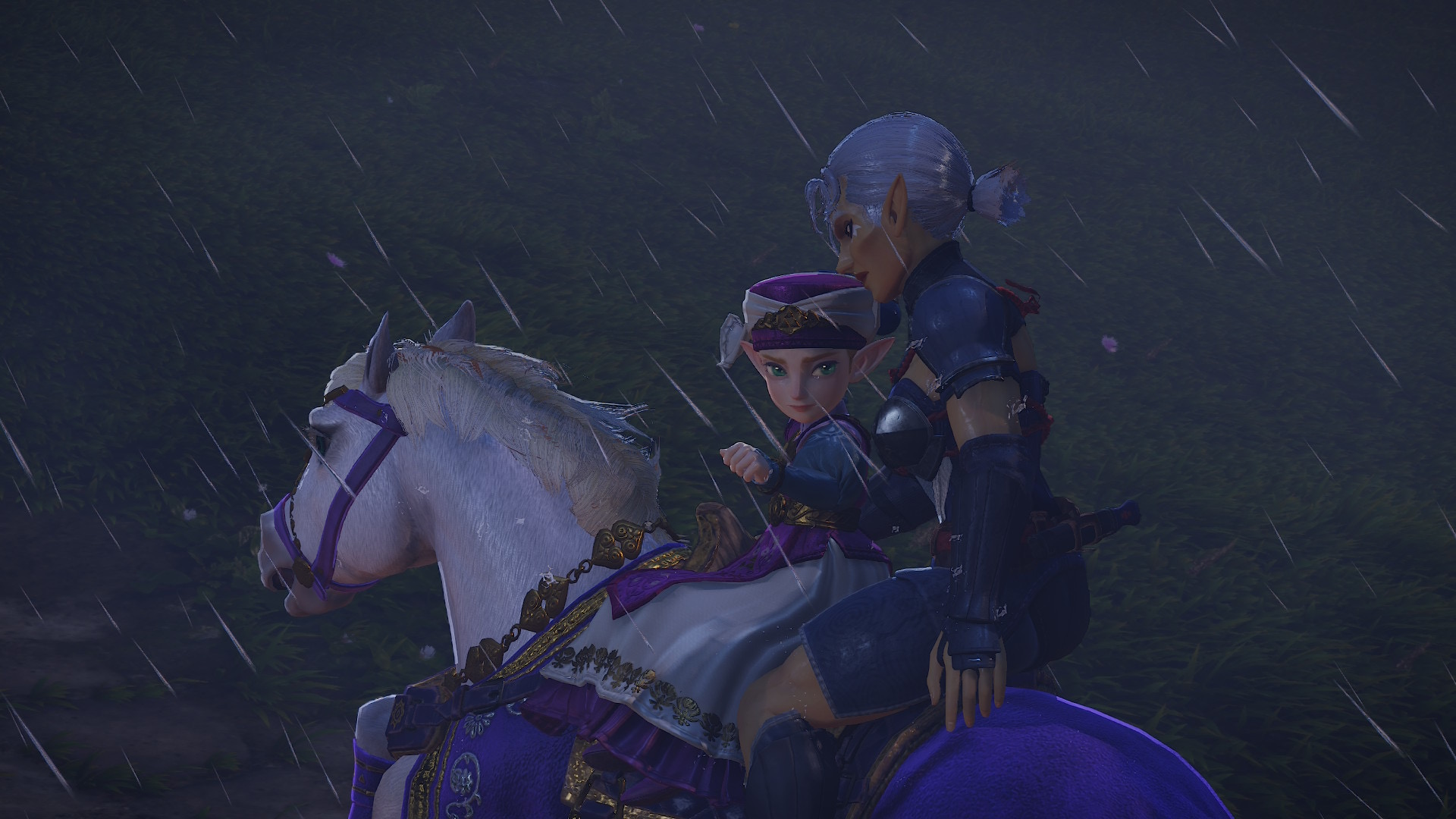
Yes, you read that heading right. The original was the greatest looking game I have played at the time of release, but this remake is the most beautiful looking game I have played…ever.
Yes, I have played Red Dead Redemption 2, Horizon Forbidden West, The Last of Us 2, and more recently, Crimson Desert in 3 different platforms (one being a gaming PC with an RTX 5070 and Ryzen 9 9900 ). Ocarina of Time beats them all.
For starters, Nintendo EAD (which now uses ‘external’ in house studios such as Monolith Software to help with its tech) has – since the Wii Days – worked with tech that is a generation behind every one else. Basically, the studio who once had top of the line technology (Nintendo 64, Game Cube) at its disposal, had been hindered by a generational handicap for the past 20 years.
Forbidden West is likely the most “tech advanced” game out of all of these titles (Crimson Desert on the RTX looks nearly photo realistic at times but on consoles I prefer FW). But Ocarina of Time…is just more pleasing to the eye…in a way that the soul can understand.
Nintendo EAD is no longer shackled by tech that is a generation behind its competitors. The Switch 2 while underpowered in contrast to the Xbox Series X and PS5…remains a member of the same generation of hardware, and is capable of many of the same things.
With DLSS, the Switch 2 can actually outperform the Xbox Series S in some of the more taxing games. Ironically, Nintendo remains allergic to the one unique feature that continues to maintain its little tablet system competitive with the bigger more expensive hardware of its competitors. Ocarina of Time doesn’t use DLSS. To quote John Linneman from DF foundry, Nintendo used “FSR1”, or an upscaling technique that its a bit less efficient than other methods.
So, some shimmering and artifacting while the game dynamically changes internal resolutions is noticeable at times. This is specially noticeable on a big OLED 4k TV. While docked the game runs at 1440p. On the Switch 2 screen the game runs at the screen’s highest resolution which is 1080p. Despite some sharper edges, the game looks incredibly gorgeous on an OLED screen.
Nintendo managed to keep the original Switch competitive through Breath of the Wild and Tears of the Kingdom, largely thanks to its unparalleled attention to detail. Now, however, the hardware limitations of a console two generations behind are no longer holding the experience back. The level of detail present in Ocarina of Time is genuinely mesmerizing at times.
Materials such as stonework, fabric, leather, and even rubber-like surfaces are rendered beautifully. The foliage is diverse, thoughtfully distributed, and carefully tailored to each biome. Rivers look and behave like actual bodies of water, while environmental effects achieve a level of realism that feels almost unexpected for a fantasy game.
Water physics are particularly impressive. Whenever Link dives into a body of water or jumps into a creek, river, or lake, he creates a convincing splash. The surrounding water responds fluidly as he swims, and his body appears to become realistically drenched as he emerges. These seemingly minor details contribute significantly to the overall immersion and demonstrate just how much care has gone into the game’s presentation.
Again, Forbidden West is pushing tech further – just like that unofficial Ocarina of Time UE5 remake was – but it doesn’t look quite as stunning in motion. It is hard to convey in words why Zelda looks better than anything else out there, but art work, and attention to detail matters. You just have to play the game yourself to see what I mean.
Best Character Models Nintendo Has Ever Rendered
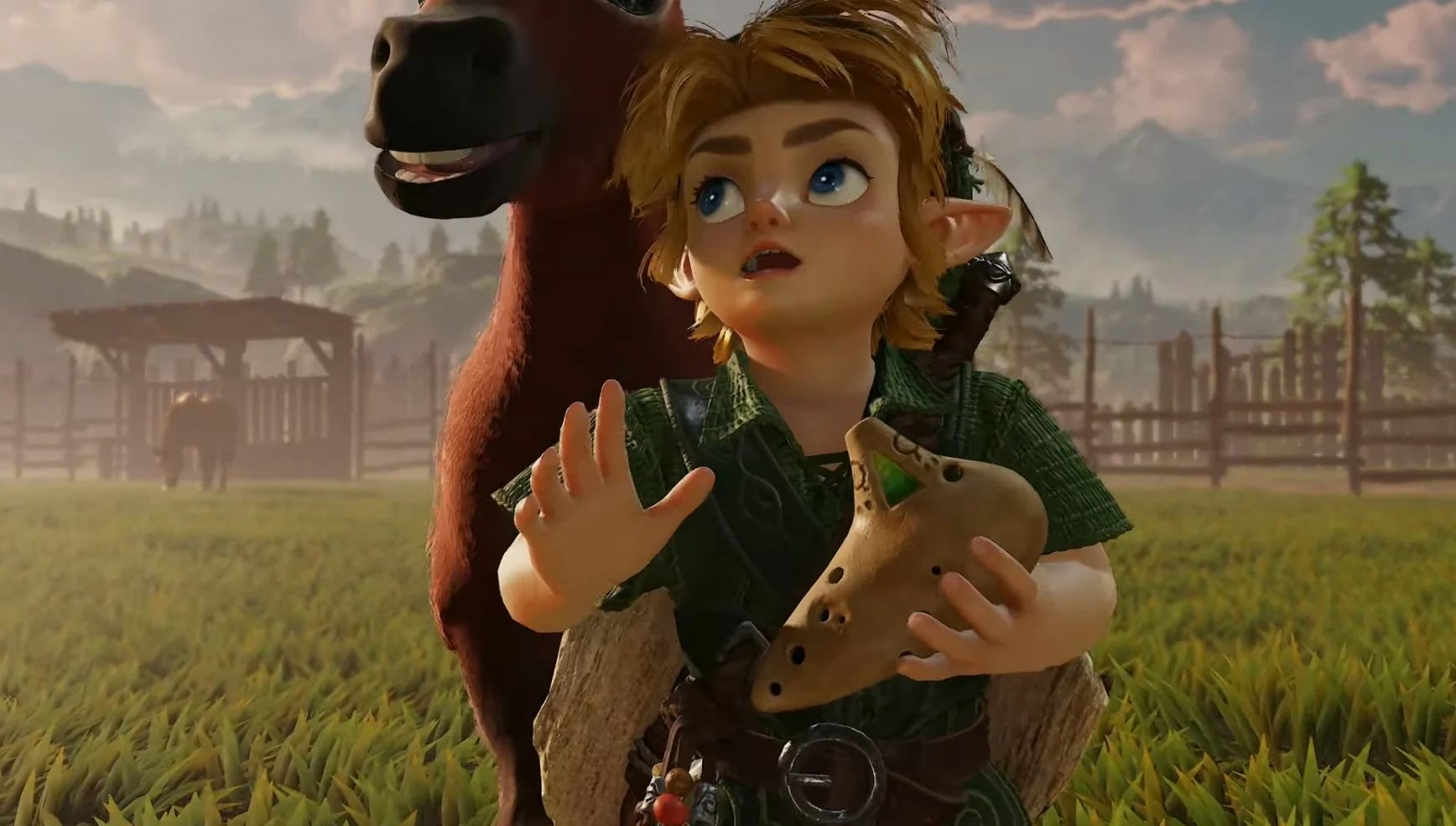
How do you convince gamers that an “anime-styled” Link and Zelda can feel just as real and believable as the photorealistic character models that have become commonplace in modern open-world games? It seemed like an almost impossible challenge, and yet, somehow, Nintendo managed to pull it off.
Certainly, the meticulous skin shading, hair rendering, and extraordinary attention to material detail—from stitching and leatherwork to the texture of fabrics—all contribute to selling the illusion. But what truly makes these characters come alive is their oversized eyes and the remarkable way in which they are rendered. They give the characters a magical spark of life, an expressiveness that is arguably missing even from many far more realistic-looking faces.
And beyond the technical achievement, there’s something else at play: an almost indescribable sense of nostalgia and emotional familiarity that the art direction evokes. It’s a feeling that caught me off guard and, once again, left me speechless from the very moment Link first opened his eyes at the beginning of the game.
These characters are a generation beyond what we saw in Tears of the Kingdom, and truly, I hope we never return to that cel-shaded style of game ever again. This is the way Zelda games were always meant to look, and before BotW sales numbers proved that the “realistic, and darker” approach sold more games.
Nintendo’s Dilemma: How Do You Fix Perfection?
Ocarina of Time is so revered – not just by fans and 1990s critics – but by developers within the industry, that Aonuma – likely – had many sleepless nights pondering whether he should expand the game or leave it as is. He is on record saying that his team wanted to add things to the game, but he reined them in. After all, this was Miyamoto’s ultimate masterpiece, and master class in 3-D game design.
Polishing the game experience around the game design and technical decisions made in the 1990s due to tech and hardware limitations is about the only thing that can be done in a case like this.
A jump button, a sprint button, a fluid 60 fps – vital to the game – experience, and the trimming of some ‘fat’ in places where it isn’t needed was Aonuma’s answer to the Ocarina of Time Remake puzzle.
Yes, towns, and areas were slightly rearranged. The chicken (cuckoos) pen in Kakariko Village is now at the front of the town as opposed to being near the cemetery entrance. Subtle, yet, effective changes like this one are present in every corner of the game. Most transformative of all is Castle Town and the outside of the Temple of Time. These areas were done in Final Fantasy styled pre-rendered back grounds on the Nintendo 64 version.
This was popular technique at the time, mostly used in the PlayStaton/Saturn 32-bit consoles, as the technique offered “realistic looking” result, while freeing up GPU/CPU resources for polygon rendering of characters and NPCs.
The Nintendo 64 having twice – 4x the RAM with the Expansion Pack – and a CPU/GPU that was a least 3 times as powerful as the PlayStation didn’t resort to this technique as it required a large storage capacity from a media format (CDs) and Nintendo’s cartridges were severely lacking in that area. Nintendo’s hardware would usually deliver convincing worlds without the need of “trickery”.
Still, Ocarina of Time used the technique, and it has been removed here. Castle Town is now fully 3-D and explorable.
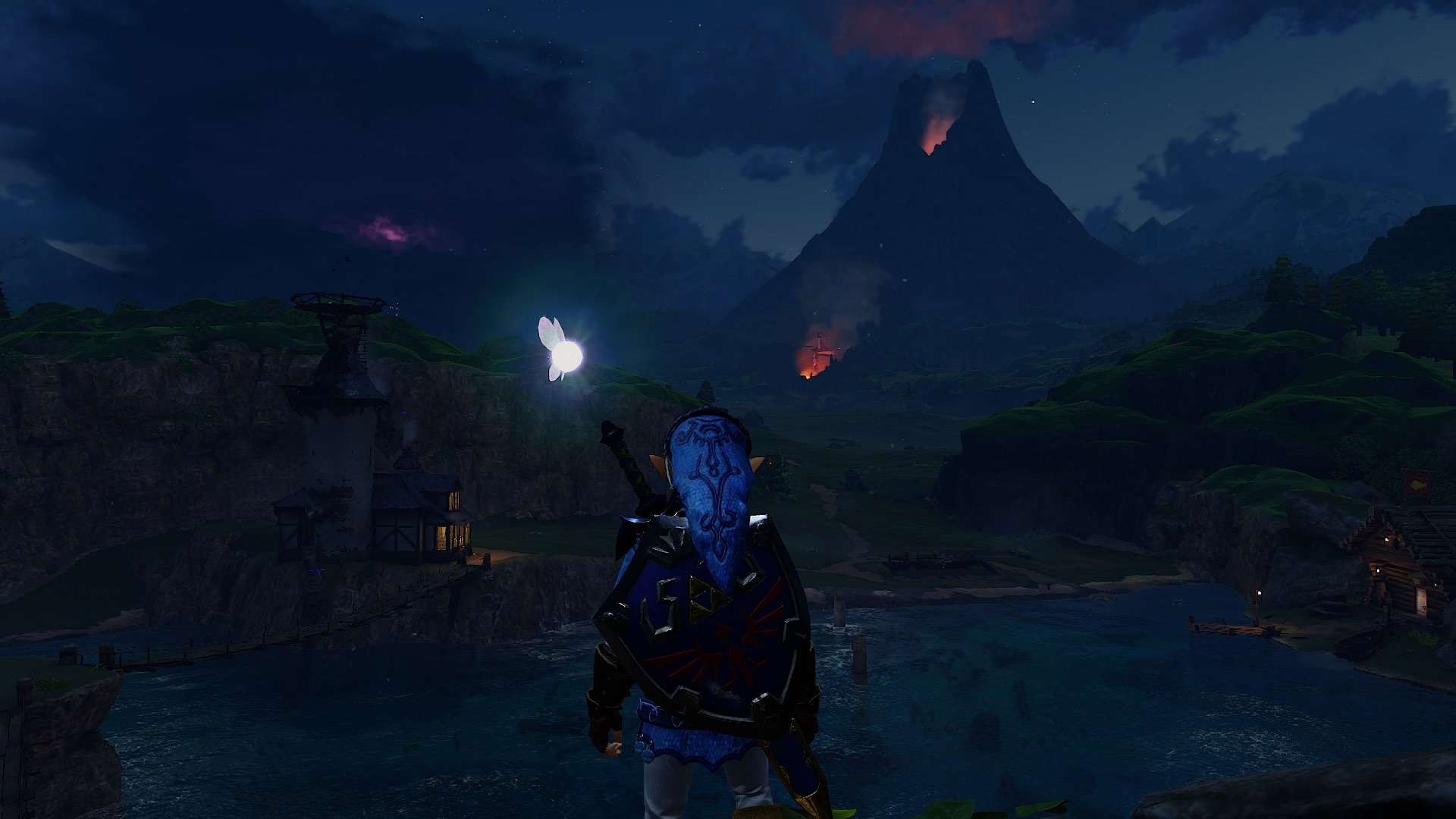
As part of the art design, and as a showcase of the Switch 2’s tech prowess, draw distance has been greatly improved, and you can now stand as far west as Lake Hylia, and see Kakariko Village, Zora’s Fountain, and even Hyrule’s castle from across the map.
It is quite the magical feel, even if it makes the world seem a little smaller than it was before.
The addition of the sprint button, effectively shrinks the world, and even makes Epona – a necessity in the original game – a bit of a nice world traversal bonus while on the field. You can quickly sprint across Hyrule on foot, and be anywhere with in a few minutes at most.
I have seen some people complaining about this, but myself, having some open world fatigue ( I lost interest in Crimson Desert after 5 hours so) found the ease of travel across this very familiar and incredibly designed world to be quite refreshing. Given the game’s 96 Metarating, I will assume many Gen Zers surprisingly agree with me on this one.
Ocarina of Time features a lot of backtracking, and a lot of exploring of every nook and cranny. I don’t think a larger world would have served it well. True, in 1998 part of the game’s charm and greatness was a direct result of its larger than life epic real state. Ironically – today – the charm lies in the terrain being significantly smaller than every other open world game made in the last 20 years.
Talk about ageless world design.
Nintendo has, in my experience, cut the some real estate that other wise wasn’t necessary. An example can be seen at the entrance of Kakariko village. In the original game there is a long soft sloping hill that leads to it after you enter the area. That slope has been largely eliminated now. It is likely that the developers felt that this was an unnecessary amount of real estate.
Consequently, the Big Goron Sword Quest is much easier now, because not only is Link faster, but also the terrain has shrunk a bit in certain key areas. So yes, in practice, Ocarina of Time Remake is easier and more accessible than the original. Nintendo likely did this to aid newer ADHD infused audiences.
I don’t mean the ADHD comment as an insult to anyone who suffers from the condition – I myself have the condition, and only found out I did as an adult – we 1990s kids were different. I was raised in a rural town, and there were no psychologists, I basically “dealt with it”. Games were not tailored to me, I just simply adjusted to the games. I suspect most 1990s gamers did the same as I did.
Today, however, younger Gen Z and Gen Alpha folks have been raised on Tik Tok, YouTube, Roblox and other slop that has basically created a fertile ground for attention spans to shrink massively on kids (and adults alike).
The cuts, and streamlining of Dungeons, does make it an easier experience, but at the same time, I can see why Nintendo chose this route. Newer generations might not have taken the original Water Temple design well, perseverance is something that was instilled by entertainment in 1990s, and pre 1990s media.
Today, however, Instant gratification is the name of the game.
This doesn’t mean that the puzzles have been dumbed down, the center piece puzzles of each dungeon remain largely unchanged. Design now is just much more linear in terms of puzzle progression. “Quality of life” tweaks might better describe what is seen here.
Another example is that Princess Ruto no longer runs away inside Jabu Jabu’s belly, saving players valuable time by not having them back track to the main room – several times – in order to pick her back up.
Seeing Kakariko Village burning up all the way from Lake Hylia is both beautiful and a goosebump moment. But is also a reminder of how compact the 1998’s Hyrule feels and is in 2026. I welcome this type of detail being showcased here, and I also welcomed the experience of playing a smaller more compact world after a decade and half of immersing myself in massive open world gaming.
Combat Remains the Same …Sort of…
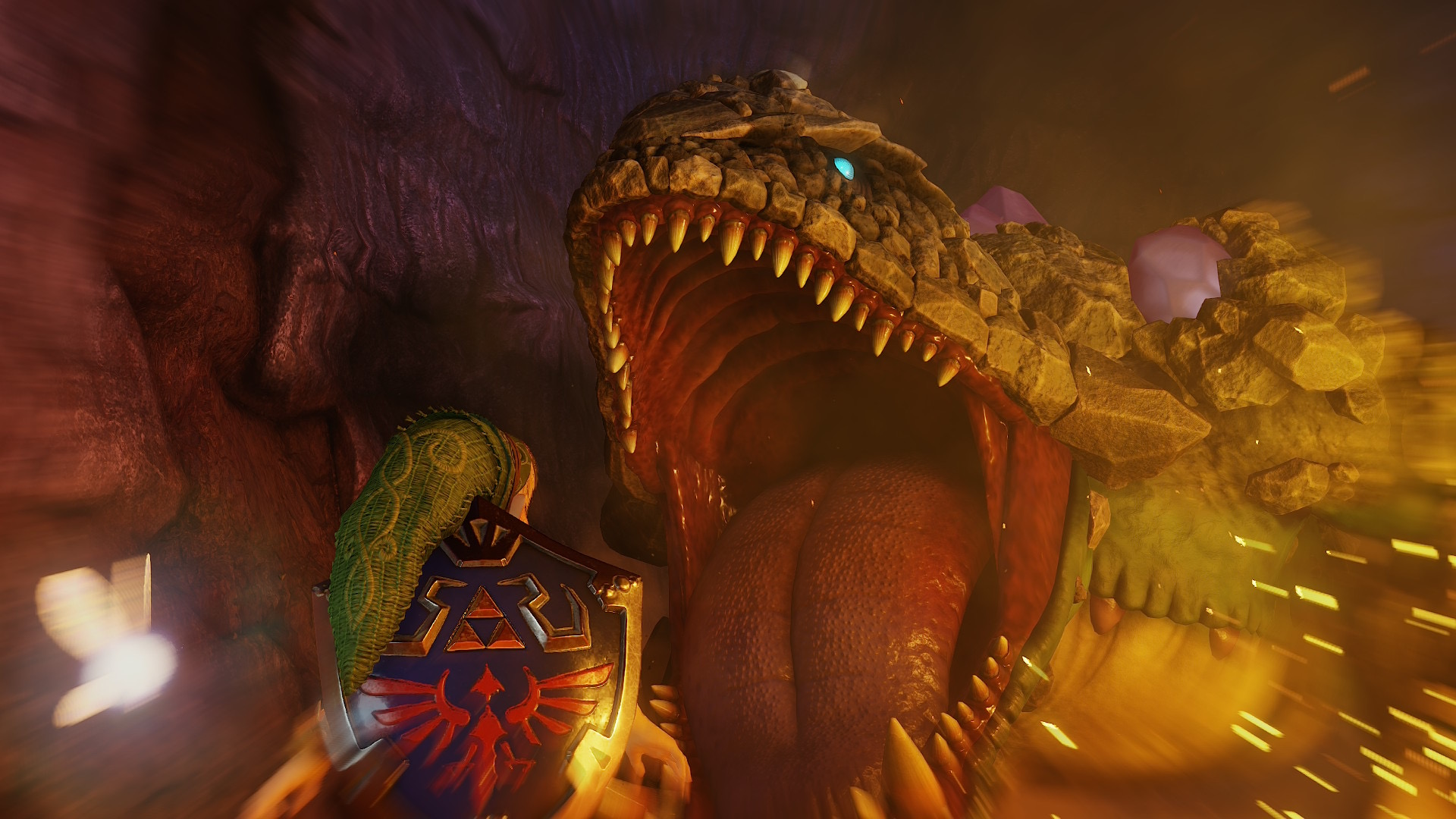
Ocarina of Time (and the Zelda series) is not Ninja Gaiden. It was never designed to be brutally punishing when it came to combat. Thus, it was always about figuring out the Bosses patterns and then exploiting said patters over and over again. The same happens here, however, I did find my timing – early on – to be off. Enemies are now animated fluidly at 60fps (3x the frame rate of the original), and so combat feels, and is faster, requiring an adjustment in timing when it comes to delivering counter blows.
This and gyro aiming affect games such as horse back archery game. I mastered the original (after many hours of practice), and I haven’t been able to get past 1,700 so far in this newer version. So, the 60fps cap doesn’t make the game any easier, or harder (the original was 20fps but it was very stable), it just changes the timing mechanics of the game. It takes time for older players like myself to adjust.
Beyond that, Z targeting still works wonders. Playing The Witcher 3 Remaster beside this game is just an eye opening experience. Ocarina of Time is so much better when it comes to control, movement and combat. It is not even close. The fact that a 28 year old game is so polished – to this day – is mind blowing. Visual clarity also favors Ocarina of Time in a huge – HUGE – way while playing portably over the aforementioned Witcher 3 (which remains a great game).
While Ocarina of Time is the father of the modern action RPG/Adventure game, do not expect Dark Souls levels of difficulty here. Zelda is more about discovery and exploration than it is about harsh combat. This is an easy game when it comes to fighting.
The Greatest Story Ever Told?
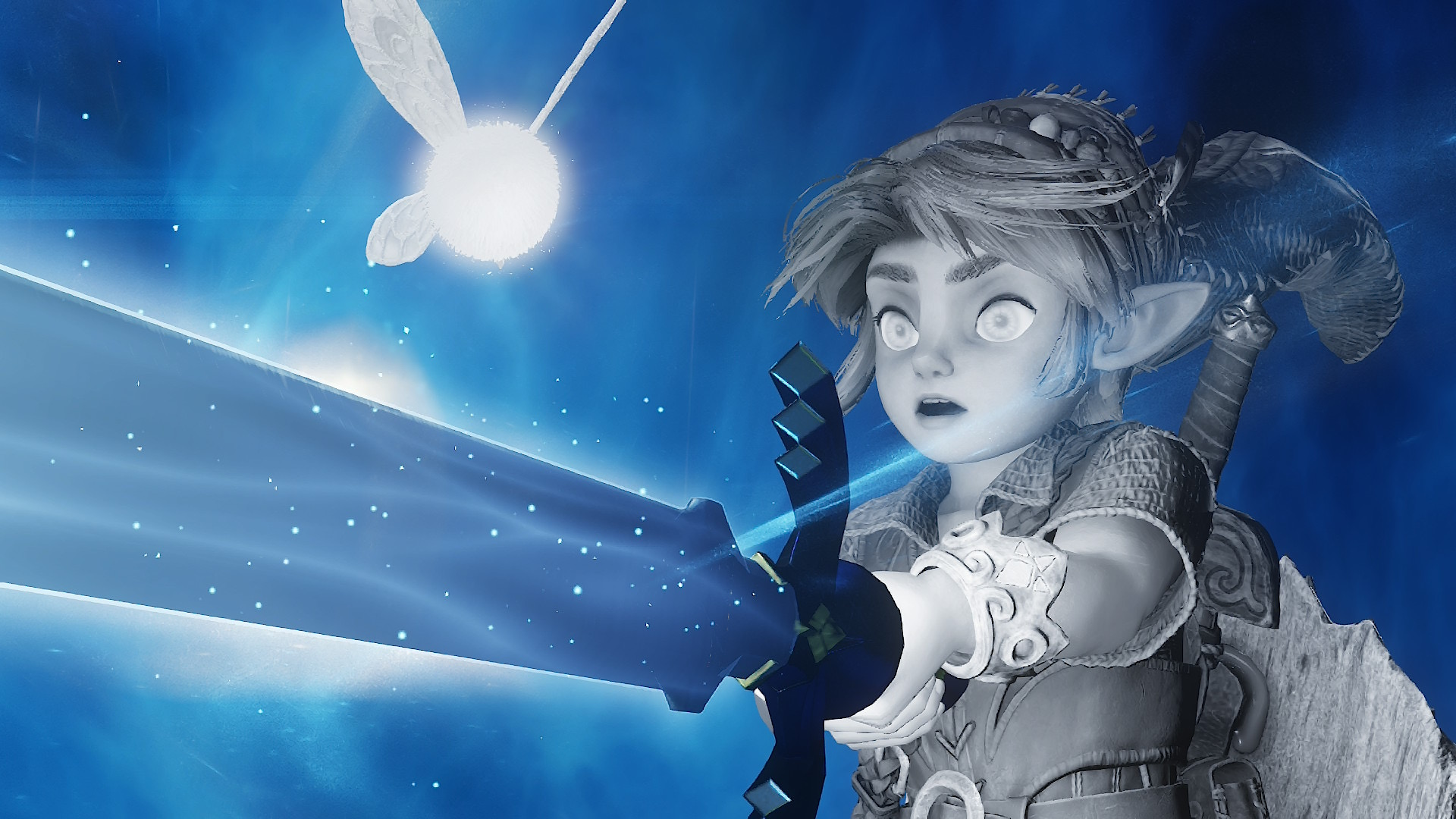
Ocarina of Time’s storyline is not as ambitious as say…Xenogears. However, it is a more personal tale than any contemporary game of the 1990s …and perhaps beyond. Nintendo has always downplayed their ‘effort’ when it comes to story telling in the Zelda series. Gameplay is first and foremost – this is a Miyamoto basic tenet – everything else is driven around that.
When I played Ocarina of Time back in 1998, this was a difficult concept to grasp, because it felt like the entire world was based around the characters themselves as opposed to the ‘horse’. Yes, according to Nintendo, the existence of the horse – as a vehicle – is the reason why we had a massive Hyrule Field in 1998. But you wouldn’t know this while playing the game.
Ocarina of Time was the first game I ever played where I felt that the world was alive, had been lived in, and that each NPC mattered. Keep in mind, I had already Played Final Fantasy VII, Wild Arms, and Chrono Trigger by then. But 3-D models, facial animations, and beautifully scripted scenes made Malon, Ingo, Talon, Saria, Mido, Ruto, Zelda, and even the Cucco Lady, come to life in a way no game had ever managed to accomplish before when it came to NPCs.
Back then critics, and myself, gave credit to the Nintendo 64 being the most powerful 3-D machine around, But today, the Switch 2 is a bit underpowered, and yet the game manages to pull off the same feat. It has always been a credit to Nintendo’s artists that these characters live and breath through our screens
Nostalgia might play a part in why Ocarina’s world and lore is so loved, but there was no nostalgia at play in my 12-13 year old heart back in 1998. Ocarina of Time’s Hyrule had a “small town” feel that is hard to convey in words, unless you have lived in a small town yourself. You basically know everybody, and their routines. Every NPC feels vital to the experience.
The way Nintendo utilized Link’s love interests as a child was brilliant as well. We all had our middle school crushes, and love interests (s0me times 3-4 girls). Link’s relationship with Malon, Ruto, Saria, Zelda, and even Nabooru (the older “unattainable” but playful girl) played out organically. There was a pureness to it all that was simply dream like.
The main plot of course pits Ganondorf, an Evil man from the desert who leads a tribe of Pirate like Women, against a very Middle Ages European – if Chivalrous – Hyrule. Obviously, magic surrounds the entire tale. An all powerful Triforce being the goal for Ganondorf. A magical forest – populated by immortal never aging kids – that is protected by giant talking tree. A chosen child of destiny who from humble beginnings must rise to save the world despite never asking for such a terrible responsibility (and subsequent fate).
Tolkien, Peter Pan, Middle Ages European history…all of it merges here. Even the architecture showcases all of this.
The Remake doesn’t change any of the above, instead it deepens the lore with more text, and even some references to later Zelda Entries. All NPCs have more dialogue text now and scripted routines – perhaps an inheritance from Majora’s Mask – it adds enough depth to keep the game somewhat fresh even for us 28 year old Ocarina of Time veterans.
Ganondorf, Saria, Zelda, and the Sages are fully acted in cutscenes. It adds a deeper layer to their personality and feelings (Saria is just heart crushing in this game). Ganondoft has more dialogue now, and is quite meaningful to the dark mood of the game.
Like I said, Xenogears might have been the most ambitious game of its era in terms of the complexity of its plot. Ocarina of Time is likely the most consequential and enduring. There is depth here, but you have to look for it. The Dark Souls series certainly pays homage to the way Nintendo presented its lore.
There is a Concern However With Some of the Dialogue Changes…
Zelda has not gone “woke” – at least not yet – but some important Dialogue changes were made to the English translation that were likely done on purpose to acclimate the game to the current political social climate.
An example is the downplaying (total elimination) of Link earning his right to be called a “real man” by Darunia.
Before entering Dodongo’s Cavern:
Original English (1998): “Become a real man!”
Remake English (2026): “Show me what yer made of!”
The original explicitly connects Link’s challenge to becoming a man. Something that every boy wants to prove to an authority figure at one point or another in childhood. The concept of being a “real man” is apparently offensive in modern times to some audiences.
The next big change come after defeating Volvagia:
Original English: “You turned out to be a real man.”
Remake English: “You went from tough little pip-squeak to tough big pip-squeak.”
This is perhaps the most significant change because the original celebrates Link’s coming of age. This one was particularly shocking given that Ocarina of Time is a coming of age story. I have always felt that pandering to political agendas ruins art, and this is a clear case of an intended message (see original game and the Japanese Remake) being completely ruined for the sake of accommodating a very small segment of the population who may (or may not) be offended by the original text.
Or perhaps, the goal here is far more sinister.
One can see that minimizing the importance of “Manhood” is something Nintendo of America went for here. The “why”, and if Nintendo of Japan knew about it, remains to be seen and answered. Though, given the current climate of modern gaming this shouldn’t surprise us.
Another glaring example was Malon’s flirty and playful “Fairy Boy” being replaced by “Fairy Child”. It completely changes the romantic dynamic between the two to some degree. Impa calling Link “Brave One”, instead of “Brave Boy”. The changes are subtle, but noticeable to those who played older versions before “progressive” audiences took over gaming.
Did this ruin my enjoyment of the game? No, as Link is referred to as a boy in other instances, which makes those key changes even odder to tell the truth. The changes weren’t necessary as I felt they did impact certain relationships and the coming of age story of the game.
Japan is largely free of our western shenanigans and the dialogue there was preserved with the original references to becoming, and being a man/boy. Therefore, I feel that Nintendo of Japan should launch an investigation into the matter and punish those responsible – if these changes were not authorized by the original writers.
Not everything needs to acclimated to “modern audiences” and it is a shame that in an otherwise magnificent remake, western politics entered the fray…even if only slightly. I would have liked my 9 year old boy to have played the storyline as it was meant to be. Perhaps an option to play the original Japanese translation in English could be added at some point.
Some may take issue with me for pointing out these key dialogue changes (there are more if you look for them), but someone has to take a stand against it, and so I have.
The Legend of Zelda Ocarina of Time Remake is an Aural Masterpiece
The original soundtrack was brought back in epic fashion with rearranged orchestral interpretations of the tracks. The Ocarina itself is a vital as ever, and has proven to be as versatile as a real instrument (judging by viral reels of people playing popular songs on it). The music is grand and sounds amazing in a proper sound system. I wish the Switch 2 had a better speakers (The Xbox Rog Ally has great ones).
Ocarina’s Gameplay is tied to music, as the Ocarina controls weather, daylight, calls Epona, Saira, and allows access to ‘Royal Family’ business among many other things – such as fast travel to temples – the instrument is ever present. But me fumbling on the Switch 2 controls trying to play a melody is a stark reminder that the game was designed with the Nintendo 64 buttons and layout in mind.
Nintendo presents a clever solution to this. I can now hum the tunes and the tablet’s microphones picks up the notes and plays the proper song. This ability was a life saver for me given that I have never been able to shake the N64 configuration out of my head, and I faced similar struggles on the 3DS version of the game.
The music in the over world – as always – is dynamic when faced with enemies. Ocarina of Time (and Majora’s Mask) is the most musical game I have ever played, and the Remake does nothing to change that fact.
I don’t think The Legend of Zelda Ocarina of Time Remake will win the GotY award, but it should win it for its music. There is nothing out there that comes close to this.
Mini Games Galore and the Axing of the First Person View
Ocarina was the king of mini games back in 1998, and it remains at the top of the heap now. The fishing game is back, and it is an engrossing as ever. Different Horse riding challenges await, and marksman competitions continue to reward Link with meaningful prizes.
I did find odd that first person aiming is gone, as is the first person view. Why this was done is beyond me. I am guessing it was removed for the sake of ease of play? I found aiming in first person in the original to be both intuitive and beneficial in the original. But that’s just me. I think eliminating this view is a bit of a backwards step.
The hook shot has also been severely stunted. You can no longer hop between roofs in Kakariko village, I am guessing this was also done for the sake of “ease” and to keep players from going roof hoping in Castle Town… which would have been fun.
I don’t find these games to be particularly easier than they were before (except maybe the bombachu game), I am still trying to get a perfect score in the Gerudo archery game.
This is a proper 50 hour game if you want to do and earn everything and you already know before hand were to look. If you don’t it can take much longer than that.
Closing thoughts on The Legend of Zelda Ocarina of Time Remake
This is the game I wanted since some dude began a Remake project using Unreal online. I was apprehensive when it was first announced, as I didn’t know how Nintendo would approached such a revered title. That said, Ocarina of Time Remake is the best game I have played since Majora’s Mask in 2000. It is a game that further cements the original as the greatest game of all time and an undying marvel of game design.
It is truly the perfect video game, and Shigeru Miyamoto’s crowning achievement. The old Nintendo Genius did not have a hands on approach in this new iteration of the 1998 classic, but his philosophy and game design spirit were perfectly preserved here. It is basically the same game we played in 1998, but with a gorgeous make over that perfectly captures that game’s visual magic and splendor for younger audiences who never got to play the original at the time of release.
Miyamoto and Nintendo EAD were decades ahead of everyone in 1998…and an argument can be made that the Remake proves that those old legends still remain more than few steps ahead of everyone nearly 3 decades later.
However, Nintendo’s biggest triumph here is that they managed to revive the 13 year old kid in 41 year old me. That’s something no other game has accomplished.
Graphics 10
The Switch 2 has no better game, and no better looking game. DLSS be damned, Nintendo crafted a detail rich world that is alive in every sense of the world. The character models and their expressive eyes have to been seen to be believed. This is exactly how we envisioned Ocarina of Time in our imagination as kids.
It isn’t about what the game does technically. It it was just about that, Forbidden West would still be my “graphics king”. It is about conveying a living breathing world full of magic and wonder. In that last regard, Ocarina of Time Remake has no equal.
The Water effects are unparalleled, and the use of materials is fantastic. The most shocking thing here is that the game runs at 60fps despite all of the visual flair. Details such as droplets of water drenching off Link further drive home the point that Nintendo spared no details here.
Story 10
Ocarina of Time tells a bunch of little stories beyond the usual “chosen one saves world and princess from evil villain”. A tragic story of growing up into a dark world and leaving behind a bright innocent childhood. A story of lazy man losing his ranch and family to his own procrastination. A farm hand daughter who remained loyal to her farm, animals, and never stopped loving her father. A Princess who sacrifices everything, including maybe the love of her life in order to do the “right thing”. A girl who has to say good bye to the boy she loves forever because she always knew in her heart that it would be that way. And some many other tales….
Ocarina is a collection of life experiences by all of these NPC woven into Link’s own story. Nintendo crafted a world with living characters, one that makes you feel like you are part of it, and even responsible for those lives. Very few games have approached that type of brilliance when it comes to world building and story telling.
You want to read and witness a great sci-fi tale? You play Final Fantasy VII. You want to live in a world and be part of a dreamlike fantasy story? Ocarina of Time is your game.
Needless to say, I am really curious about the potential of Majora’s Mask remake.
GamePlay 10
While some might debate me on the other categories. Gameplay is the one where Ocarina is undoubtedly undefeated in. Tight controls, brilliant fluidity in combat, masterful dungeon and world design. Ocarina set the standard for how all other open world 3-D games would be made…I still feel that no one has quite matched that standard as of yet.
Overall 10
This is a 2026 version of the Greatest Game of all Time, and it does nothing but enhance the already legendary reputation of the original. The Remake is fantastic, but even then it doesn’t quite match the awesomeness of the original at the time of release. I will not penalize the remake for this, as nothing ever will – match the original.